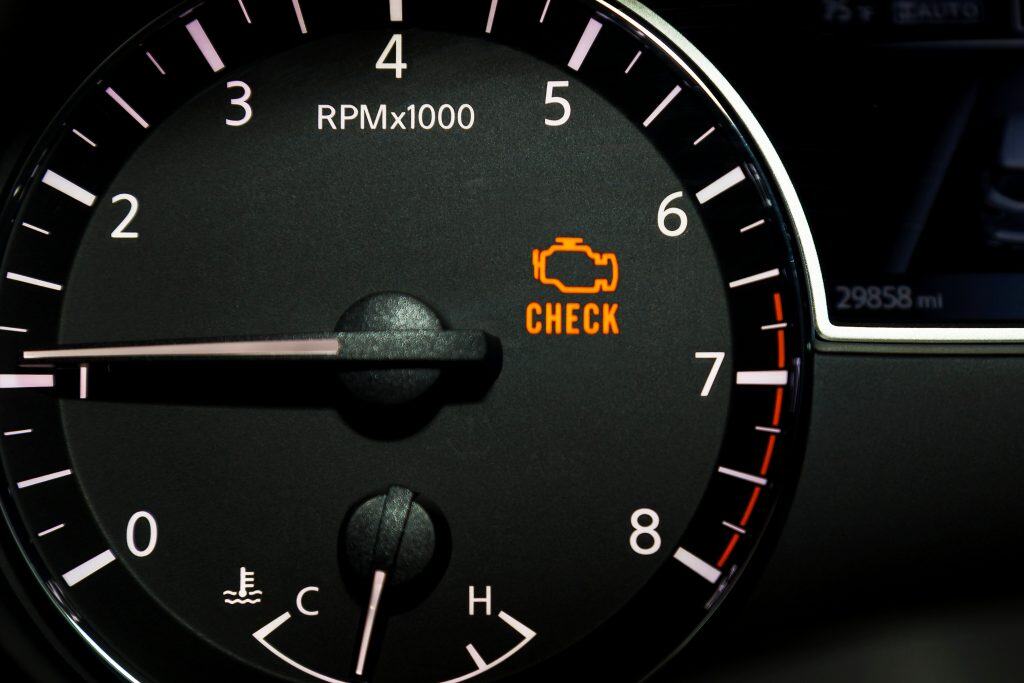
That little orange light on your dashboard just came on, and now you are trying to figure out how worried you should be. Should you pull over right now? Can it wait until the weekend? Is this a minor fix or a major engine problem? The check engine light does not tell you any of that. It just says something is wrong.
The check engine light, sometimes labeled “service engine soon,” is the most common and most misunderstood warning light on any vehicle. It can mean something as simple as a loose gas cap. It can also mean your catalytic converter is failing, your oxygen sensors are reading incorrectly, your ignition coils are misfiring, or your transmission is not shifting properly. The light is the same for all of them, which is why guessing is never a good strategy.
The only way to find out what triggered the light is to connect a diagnostic scanner to the vehicle’s onboard computer and read the stored trouble codes. But here is the part that most people do not realize: a code is not a diagnosis. A code tells you where the problem is, not what the problem is. A code for an oxygen sensor does not always mean the sensor itself is bad. It could be a vacuum leak, an exhaust leak, a wiring issue, or a failing catalytic converter that is causing the sensor to report incorrect readings. Replacing the sensor without investigating further is how people end up spending money on parts they did not need and still have the same light on a week later.
At Kneble’s Auto Service Center, our ASE-certified technicians go beyond reading codes. We diagnose the root cause of the problem so the repair is done right the first time. Our service includes a computer system scan at no charge, and if further diagnostics are needed, we will explain the situation and provide an estimate before doing any additional work.
Common Reasons Your Check Engine Light Is On
There are dozens of reasons a check engine light can come on, but certain issues come up far more often than others. Here are the ones we see most frequently at our shop:
Loose or damaged gas cap. This is the simplest and most common cause. If the gas cap is not sealed properly, the evaporative emissions system detects a leak and triggers the light. Before you schedule a repair, try tightening or replacing the gas cap. If the light does not go off after a few drive cycles, the issue is something else.
Oxygen sensor failure. Your vehicle has multiple oxygen sensors in the exhaust system that monitor how efficiently the engine is burning fuel. When a sensor fails or reads incorrectly, the engine computer cannot optimize the fuel mixture, reducing fuel economy and increasing emissions. This is one of the most common causes of the check engine light across all vehicle makes.
Catalytic converter issues. The catalytic converter reduces harmful emissions in your exhaust. When it begins to fail, it triggers a check engine code and can cause reduced engine performance, a sulfur smell from the exhaust, and eventually a failed NJ state inspection. Catalytic converter replacement is one of the more expensive repairs, which is why proper diagnosis is critical. Sometimes what appears to be a catalytic converter code is actually caused by an upstream oxygen sensor, ignition misfire, or exhaust leak that is much less expensive to fix.
Ignition coil or spark plug failure. When a coil or spark plug fails, the engine misfires. You may feel the engine shaking, notice a loss of power, or see the check engine light flash (which indicates an active misfire, see below). Replacing coils and spark plugs is straightforward and restores engine performance.
Mass airflow sensor (MAF) issues. The MAF sensor measures the amount of air entering the engine. A dirty or failing sensor sends incorrect readings to the engine computer, which affects fuel delivery, idle quality, and performance. In many cases, cleaning the sensor resolves the issue without replacement.
EVAP system leaks. The evaporative emissions system prevents fuel vapors from escaping into the atmosphere. A small leak in the system, whether from a cracked hose, a bad purge valve, or a faulty vent, will trigger a check engine code. EVAP codes are common and usually not urgent, but they will cause a failed NJ inspection if not addressed.
EGR valve problems. The exhaust gas recirculation valve redirects a portion of exhaust gas back into the engine to reduce emissions. When it sticks open or closed, it causes rough idle, poor performance, and a check engine light.
Transmission-related codes. Some check engine codes are related to the transmission rather than the engine itself. Shift solenoid issues, torque converter problems, and transmission fluid temperature codes all trigger the check engine light and require specific diagnostic expertise.
Flashing Check Engine Light vs. Steady Check Engine Light
There is an important difference between a check engine light that stays on steady and one that flashes.
A steady check engine light means the system has detected a problem and stored a trouble code, but the issue is not immediately damaging the engine. You should schedule a diagnostic appointment, but in most cases you can continue driving normally in the short term.
A flashing check engine light means the engine is actively misfiring, and unburned fuel is being sent into the exhaust system. This can damage the catalytic converter quickly and turn a moderate repair into an expensive one. If your check engine light is flashing, reduce your speed, avoid hard acceleration, and get to a shop as soon as possible. Do not ignore a flashing check engine light.
Check Engine Light Diagnostics at Kneble’s
When you bring your vehicle to Kneble’s for a check engine light, here is what happens:
Code scan. We connect a professional-grade diagnostic scanner to your vehicle’s OBD-II port and read all stored and pending trouble codes. This tells us which system or component the engine computer has flagged. This scan is included at no charge as part of our.
Code interpretation. A code is a starting point, not a conclusion. Our technicians interpret the codes in the context of your specific vehicle, its mileage, its service history, and any symptoms you have noticed. A P0420 code on a 2015 Honda Accord means something different than the same code on a 2012 Volkswagen Jetta, even though the code number is the same.
Further diagnostics (if needed). In some cases, the code and a visual inspection are enough to identify the problem. In other cases, we need to perform additional testing: checking sensor readings with a scan tool, inspecting vacuum lines, performing a smoke test for leaks, testing electrical circuits, or evaluating component function directly. If further diagnostics are needed beyond the free scan, we will explain what we need to do and provide an estimate before proceeding.
Honest recommendation. We tell you what we found, what it means, and what we recommend. If the repair is urgent, we will explain why. If it can wait, we will tell you that too. If the issue is a loose gas cap, we will tighten it and send you on your way.
Why a Code Reader from the Auto Parts Store Is Not Enough
Many people stop at an auto parts store, get a free code scan, buy the part the code points to, and either install it themselves or bring it to a shop. Sometimes that works. Often it does not.
The free scanners at auto parts stores read the code number and give you a generic description. They do not tell you why the code was triggered. A code for “catalyst system efficiency below threshold” could mean the catalytic converter needs replacement, or it could mean an oxygen sensor upstream is sending bad data, or there is an exhaust leak between the sensor and the converter, or the engine has a misfire that is dumping unburned fuel into the exhaust and damaging the converter secondarily. The code is the same in all four scenarios. The repair is completely different.
Replacing an expensive catalytic converter when the real problem is a less costly oxygen sensor is an expensive mistake. So is replacing a sensor when the real problem is an inexpensive vacuum hose. Proper diagnosis saves money in the long run by identifying the actual cause the first time.
Check Engine Light and NJ State Inspection
In New Jersey, a check engine light is an automatic inspection failure. Your vehicle will not pass its until the check engine light is off and the underlying issue is resolved. Additionally, the vehicle’s readiness monitors (internal self-tests the computer runs while you drive) must be complete. This means that simply clearing the codes right before your inspection will not work. The monitors need time and driving cycles to reset, and if they are not ready, the vehicle will fail.
If your NJ inspection is coming up and your check engine light is on, schedule your diagnostic appointment now rather than waiting until the week before your inspection. This gives you time to get the repair done and allow the monitors to complete their cycle before your inspection date.
Check Engine Light and Your Lease Return
If you are returning a leased vehicle, a check engine light at the time of the lease return inspection is an automatic charge. The dealership will diagnose the issue and repair it at their labor rates, which are consistently higher than what an independent shop charges. Addressing a check engine light before your lease return is one of the simplest ways to avoid a repair bill on your final statement.
Our free code scan can tell you whether the issue is something minor or something that needs attention. For a full assessment of your vehicle’s lease return readiness, see our.
Check Engine Light Diagnostics for All Makes and Models
We diagnose check engine lights on domestic and foreign vehicles of all makes and models. This includes Toyota, Honda, Nissan, Ford, Chevrolet, Hyundai, Kia, Subaru, and all other domestic and Asian brands, as well as BMW, Mercedes, Audi, Volkswagen, Land Rover, Porsche, Jaguar, Mini Cooper, and other European makes. Each manufacturer uses its own set of manufacturer-specific codes in addition to the universal OBD-II codes, and our diagnostic equipment and training cover both.
How Much Does Check Engine Light Diagnosis Cost?
Our includes a computer system scan at no charge. This scan reads all stored and pending trouble codes and gives us a starting point for diagnosis. In many cases, the code scan combined with a visual inspection is enough to identify the problem and provide a repair estimate.
If the issue requires further diagnostic testing beyond the initial scan, we will explain what additional work is needed and provide an estimate before proceeding. You will never be charged for diagnostics without your approval.
The repair cost itself varies depending on what is causing the check engine light. A gas cap replacement is inexpensive. An oxygen sensor replacement costs moderately more. A catalytic converter replacement can be significantly more expensive depending on the vehicle. We always provide a clear estimate before starting any repair work.
Frequently Asked Questions About the Check Engine Light
The check engine light means your vehicle’s onboard computer has detected a problem in the engine, transmission, or emissions system and has stored a diagnostic trouble code. The light does not tell you what the problem is, only that something needs attention. A diagnostic scan is required to read the code and begin the diagnosis.
In most cases, yes, as long as the light is steady and you are not noticing any major changes in how the vehicle drives. A steady check engine light usually indicates a problem that should be addressed soon but is not immediately dangerous. However, if the light is flashing, you should reduce your speed and get to a shop as soon as possible, as a flashing light indicates an active engine misfire.
Sometimes. If the issue that triggered the light was temporary (like a loose gas cap that has since been tightened), the light may turn off after a few drive cycles once the system passes its self-test. If the light stays on for more than a few days, the issue is persistent and needs diagnosis.
Yes. A loose, damaged, or missing gas cap is one of the most common reasons for a check engine light. The evaporative emissions system detects the leak and triggers a code. Try tightening the cap and driving for a few days. If the light does not clear, the issue is likely something else.
Yes. A check engine light is an automatic NJ state inspection failure. The light must be off and the underlying issue must be resolved before the vehicle can pass. Additionally, the vehicle’s readiness monitors must be complete, which requires driving the vehicle normally for several days after a repair.
There are a few possible reasons. The original diagnosis may have been incomplete, and the repair addressed a symptom rather than the root cause. Multiple codes may have been present and only one was addressed. Or the vehicle may have developed a new, unrelated issue. This is why thorough diagnosis matters. At Kneble’s, we diagnose the root cause rather than just replacing the part the code points to.
The cost depends entirely on what is causing the light. There is no single price because the check engine light can be triggered by dozens of different issues ranging from an inexpensive gas cap to a costly catalytic converter. We provide a free code scan and a clear estimate before any repair work begins.
A basic OBD-II code reader can be useful for reading codes and clearing them in non-critical situations. However, reading a code and diagnosing the underlying problem are two very different things. A code reader tells you where the computer sees a problem. A trained technician tells you why the problem exists and what it actually takes to fix it.
Schedule Your Check Engine Light Diagnostics
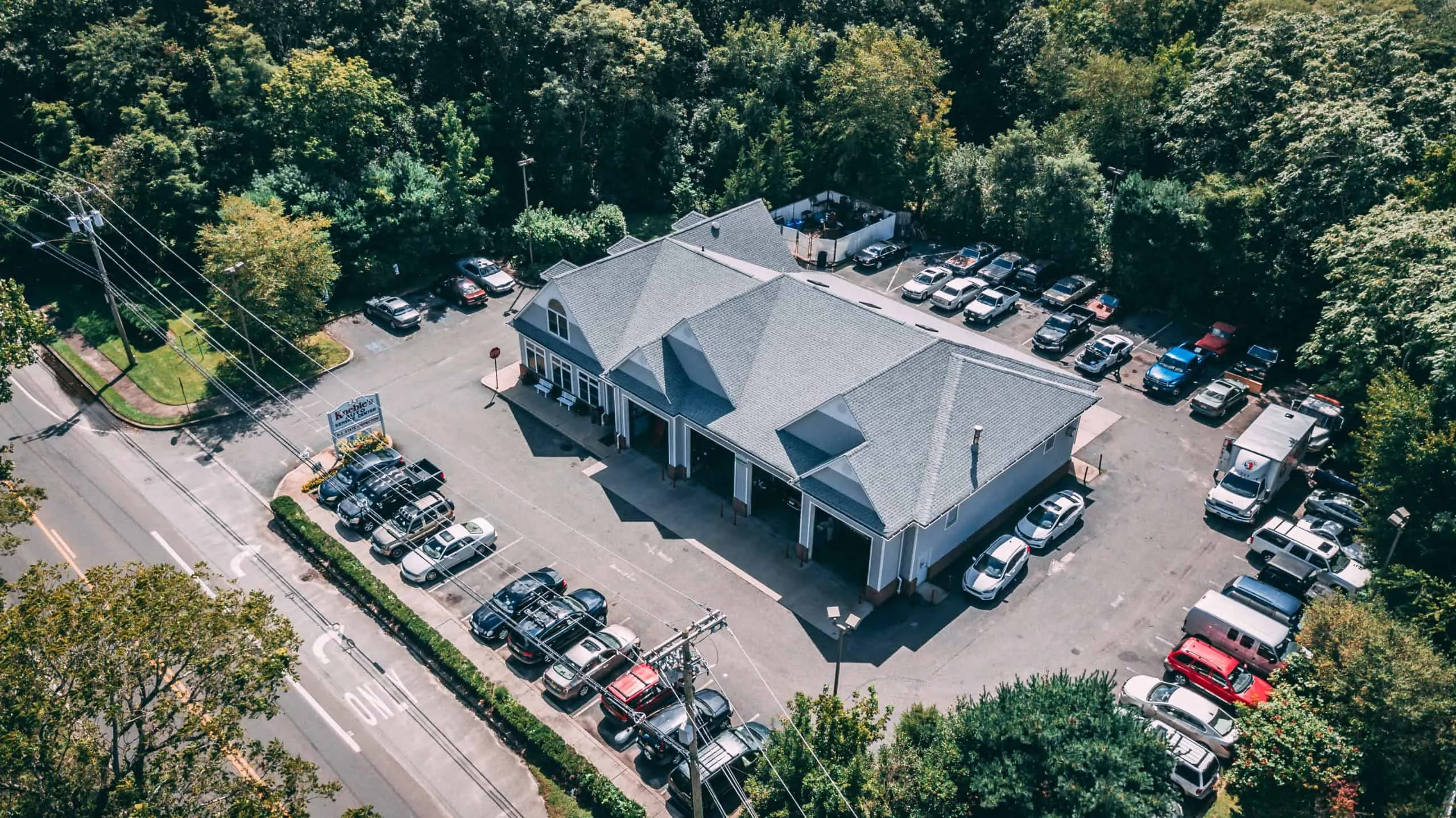
At Kneble’s Auto Service Center we always want to make the process of getting your car serviced as convenient as possible. If you need check engine light diagnostics, call us at (609) 625-3286 or schedule an appointment online.
We are able to accommodate those who desire to wait as we feature a comfortable waiting area complete with TV, complimentary refreshments, a library, a desk, and a charging station. And yes, we even have free Wi-Fi!
Please note that we offer a shuttle service within a 10-mile radius of the shop. This includes Pleasantville, Port Republic, Hammonton, and Buena and beyond!
Where to Get Check Engine Light Diagnostics?
Our Address
5473 Somers Point Road
Mays Landing, NJ 08330
Our Hours
Monday – Friday: 8:00am – 5:00pm
Saturday:
8:00am – 4:00pm
Sunday: Closed