Table of Contents
Tires are an integral component that contributes to having a smooth and safe ride in your vehicle. It is important to make sure that your tires have sufficient tread and are properly inflated at all times to ensure the safe operation of the vehicle with maximum steering control.
It is a good habit to visually inspect your tires before getting in the car. This will allow you to see if a tire may be low on air, which could cause the car to drift to one side or another. If a tire appears low on air pressure, it is important that you bring your car in to identify any source of leakage before the tire goes completely flat, which would require changing it out with the spare, or calling for roadside assistance. Most of all, having a flat tire is an inconvenience that can often be avoided by simply noting when a tire looks lower than normal.
If you notice odd wear patterns such as a tire wearing more on one side of the surface, this could be an indication that your car needs a wheel alignment which is something that we can perform for you.
If one of your wheels is out of balance, you may feel a vibration in the front end or even in the steering wheel as the vehicle’s speed increases. We have the equipment to check and balance your wheels if necessary. A wheel balance is also something that needs to be done whenever your tires are replaced.
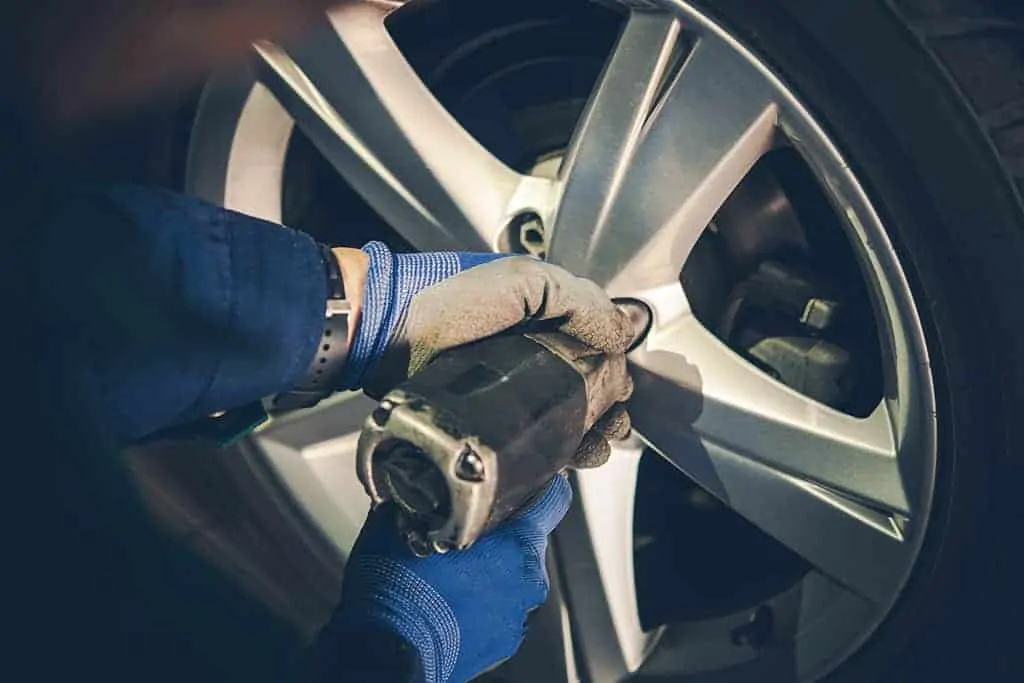
Under ideal circumstances, your tires should last roughly 50,000 miles before wearing to an unsafe level. Periodic vehicle maintenance that can maximize the life of your tires includes having your tires rotated, having your wheels balanced & aligned, and ensuring that your suspension components are not worn out. If a tire is damaged or punctured and needs to be replaced before the tread wears out, it is recommended to replace the tires in sets of two (i.e both front or both rear) to ensure the best handling and performance of the vehicle.
When considering tire replacement, it is important to know what size your tires are. Most vehicles have this information on a tag on the pillar that you see when you open the driver’s door. This tag should indicate the recommended tire size (which should read something like 205/65R16 95H) as well as the recommended tire pressure. If your car does not have this information tag, you should be able to read the tire size on the sidewall of the tire.
Tire Services & Repairs We Perform:
- Tire Replacement
- Wheel Replacement
- Wheel Balance
- Wheel Alignment
- Tire Leak Diagnosis and Repair
Ready to Make An Appointment For Your Tire Service?
At Kneble’s Auto Service Center we always want to make the process of getting your car serviced as convenient as possible. To ensure that we can get your car serviced in a timely manner, we ask that you make an appointment.
We are able to accommodate those who desire to wait for their tire service as we feature a comfortable waiting area complete with TV, complimentary refreshments, a library, desk, and a charging station. And yes, we even have free Wi-Fi!
In some cases, we may determine that the car needs to stay overnight either due to the time required for service or the unavailability of parts.
If you need service and have not made an appointment you can always feel free to call us at (609) 625-3286 to get on the schedule.
Please note that we offer a shuttle service within a 10-mile radius of the shop (Atlantic City, Estell Manor, Dorothy, Pleasantville, and surrounding areas).
Frequently Asked Questions About Tires:
Some tires are equipped with tire tread indicators, to let you know when the tread is nearing the unsafe range. Additionally, you can purchase a tire tread depth gauge at an auto parts store to measure the tire tread depth. We perform a basic safety inspection whenever you bring your car in for service, so we will let you know the condition of your tires. You can always bring your car in between service intervals to have us inspect your tires if you have any questions about the tread depth or any odd wear patterns on your tires.
If a tire is punctured in an area where it is too close to the sidewall, it is not considered safe to repair as this may impact the structural integrity of the tire and cause a blowout.
This sounds like tire “cupping” and it can be caused by driving for an extended time on tires that are out of balance or on a vehicle that has worn suspension components. If you bring the vehicle in for an inspection, one of our ASE Certified Technicians should be able to diagnose the cause.
Tire bubbles: why they happen and what to do
A bubble on the sidewall of your tire means the internal structure has been damaged, usually from hitting a pothole or curbing a wheel. The impact breaks the cords inside the tire that give the sidewall its strength. Once those cords are broken, air pressure pushes through the weak spot and creates a visible bulge.
A tire with a sidewall bubble is not safe to drive on. The weakened area can blow out at highway speed with no warning. Unlike a nail in the tread, a sidewall bubble cannot be repaired. The tire needs to be replaced.
If you spot a bubble, avoid driving on the tire if possible. If you have to drive to get to the shop, keep your speed low and avoid highways. The risk of a blowout increases with speed and heat.
Potholes are the most common cause in this area, especially after winter when road surfaces break up. If you hit a bad one, it’s worth checking your tires for damage even if everything feels normal. The bubble might not appear immediately. Also have your suspension checked, since the same impact that damaged the tire can knock alignment out or stress other components.
Read the full video transcript
Have you suddenly noticed a bubble in your tire, oops? Or you’re wondering, is it safe to drive with that bubble in your tire?
Hi, I’m Nancy at Kneble’s Auto Service Center. Definitely not. It is not safe. A bubble in the side of your tire usually comes from hitting a pothole or hitting a curb. Oops. This causes the integrity of the tire to be compromised and the sidewall is weakened. Therefore, air leaks into the inside of the tire creating that bubble.
A bubble and your tire are not safe to drive on because you’re at risk of that tire exploding while you’re driving. A bubble in the sidewall of the tire is not repairable. Your only option is purchasing a new tire.
Remember, drive safe and responsible.
Dry rot in tires: how to spot it and prevent it
Tires are made of rubber, and rubber breaks down over time. Dry rot is the visible result of that breakdown: cracks in the sidewall or tread, a brittle feel to the rubber, flaking, and a faded gray color where the tire used to be black.
On average, tires last between six and seven years regardless of tread depth. A tire that still has plenty of tread but is seven years old may be more dangerous than a newer tire with less tread, because dry rot compromises the tire’s structural integrity and can lead to a blowout.
Here’s how to check the age of your tires: look for the DOT code on the sidewall. The last four digits indicate the manufacturing date. For example, “4115” means the tire was made in the 41st week of 2015. If your tires are six years old or older, have them inspected even if they look fine from a distance.
Common causes of dry rot beyond age:
Sitting in one place. Tires that don’t move for extended periods develop flat spots and stress cracks. If your vehicle sits for weeks at a time, the tires deteriorate faster than tires on a car driven daily.
Sun exposure. UV light accelerates rubber breakdown. Vehicles parked outside in direct sunlight are more prone to dry rot than those kept in a garage.
Underinflation. Running tires below the recommended pressure creates excess flex in the sidewall, which speeds up cracking.
Overloading. Carrying more weight than the tires are rated for stresses the rubber beyond its design limits. Check your owner’s manual for the vehicle’s weight capacity.
To slow dry rot: rotate your tires regularly, keep them properly inflated (your TPMS will alert you if pressure drops), drive the car regularly, and park in the shade or a garage when you can. If you’re seeing early signs of cracking, bring the tires in so we can assess whether they’re still safe or need replacement. Call us at 609-625-3286 to schedule.
Read the full video transcript
When was the last time you took a good look at not yourself but your tires? Like ourselves, tires also start showing signs of age and misuse by dry rotting. Now’s the time to criticize our tires rather than ourselves in the mirror.
Hi, I’m Nancy at Kneble’s Auto Service Center. Tires, like humans, show signs of aging. Thankfully, we last a bit longer than the rubber that our tires are made of. It is important to know the condition and age of your tires. On average, tires will last between six to seven years.
When examining your tires, here are three items you need to look for to show the following signs of rubber breaking down. Cracks. They may be seen in the sidewall or tread. The tire may feel brittle, and you may notice parts of the rubber even flaking off. The color of the tire may start to fade from black to gray.
And tires are coded with their manufacturer date on the sidewall. For example, your tire may have the number 4115 at the end of the DOT or Department of Transportation Number. This number represents the tire manufactured on the 41st week in the year 2015. Hence, this is an example where your tires are seven years old. Do not ignore signs of aging tires.
Driving with dry rot tires is dangerous as a blowout can occur at any time. Reasons for dry rot are not just from the tire’s age but also from not using the vehicle. If your vehicle sits in one place for a long period, this causes stress on the tire; hence, cracks can start to develop. This can even become worse when the tires are exposed to long periods of sunlight, which can increase dry rot. Driving on under-inflated tires may also lead to dry rot. And overloading your vehicle with weight can stress tires leading to dry rot. Vehicles are designed with a specific size, tire, and weight capacity. So check your owner’s manual for that information.
Some easy preventative solutions to help prevent premature dry rot of the tires include rotating your tires. This allows for tires not to be in the same location for a long period. Use your vehicle, so it’s not parked in the same location for long periods. Tires are expensive, so having them not prematurely needing replacement is certainly best for your pocket.
Spare tire limits and tread depth basics
If you’re driving on a compact spare (the small “donut” spare), keep it under 50 mph and don’t drive on it longer than necessary. Compact spares are designed to get you to the shop, not to be a long-term replacement. They have less traction, less stability, and they affect your car’s handling and braking. Most manufacturers recommend no more than 50 to 70 miles on a compact spare.
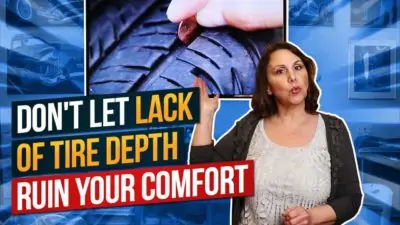
For tread depth, the legal minimum in New Jersey is 2/32 of an inch, but traction drops well before that point. At 4/32, wet weather stopping distances increase noticeably. If your tires are getting close, especially heading into a rainy season, it’s worth replacing them before they reach the legal minimum. Worn tires are one of the items checked during your NJ state inspection, so staying ahead of tread wear avoids a failed inspection on top of a tire purchase.
If you’re unsure about your tread depth, a tire tread gauge costs a few dollars at any auto parts store, or bring the car in and we’ll measure it during any service visit. For a full rundown on tire warning signs, we break down the five most common ones.
Schedule an Appointment for Your Tire Service
Tire Knowledge Base
Tires Posts
5 Tire Warning Signs that Signal it is Time for New Tires
Are you unsure if you are in need of new tires? Learn about 5 issues that may be plaguing your tires that require replacing your tires today!
The Definitive Tire Change Guide
How to change a tire if you can’t get to us. The definitive guide to changing a tire that will get you back on the road safe & fast!
Tires Videos

Where to Get Your New Tires to Replace Your Vehicle’s Old Tires?
Our Address
5473 Somers Point Road
Mays Landing, NJ 08330
Our Hours
Monday – Friday: 8:00am – 5:00pm
Saturday:
8:00am – 4:00pm
Sunday: Closed