
Imagine having to create a product that can put up with what your tires deal with each day. No matter if you drive all the time or very sparingly, your tires are adapting to challenges all the time without missing a beat. They handle many thousands of pounds of pressure, jarring impacts, and dramatic temperature changes to keep you and your family safe.
They’re the only part of your car (hopefully) that makes contact with the ground and so they determine the kind of drive you make each day. For those reasons, it’s vital to keep them in good condition and today we’re going to key you in on the most important warning signs to look out for when it comes to the condition of your tires.
Tire Pressure Monitoring System (TPMS) Senor Signaling Low Pressure
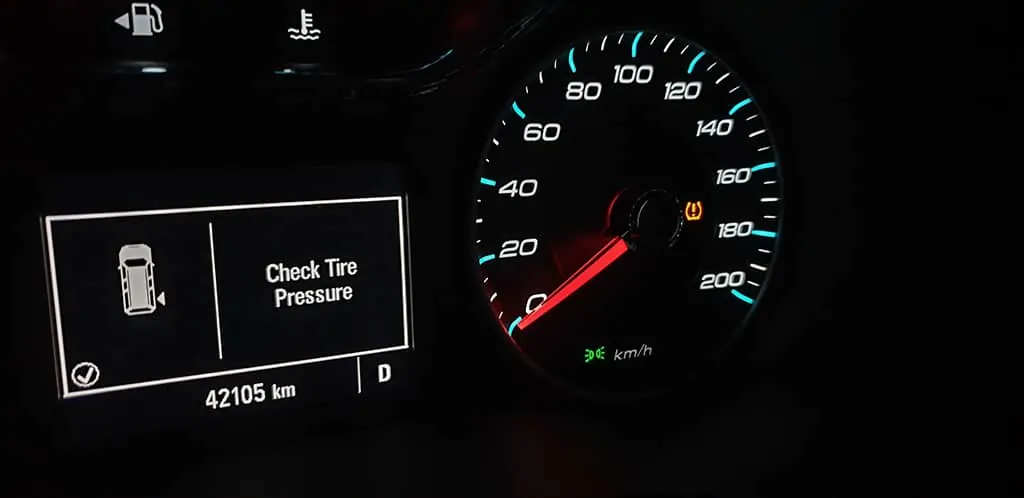
Perhaps the easiest way to know that there’s a problem is just to keep an eye on the dashboard. If you’re driving a vehicle made in 2008 or later you’ll have a TPMS light that alerts you when the pressure in one or more of the tires is too low.
If that light comes on, or you notice one tire being very low as you walk up to your vehicle it’s a clear sign that attention is needed. Often times, tires that leak after picking up road debris, can be repaired.
That means that as soon as you notice a pressure problem, bring it into us so that we can get it mended for you. If you wait too long damage may increase and become impossible to repair.
Ride Quality
It may be that the very first thing you’ll notice when something is wrong with your tires is a change in ride quality. Perhaps there’s a new vibration that you feel in your seat. Vibrations can also manifest in a wobble at your steering wheel that you can easily feel in your fingers.
Additionally, you may notice that your vehicle may begin pulling in one direction or another. This typically begins with a subtle pull and becomes more apparent as time goes on.
Odd Tread
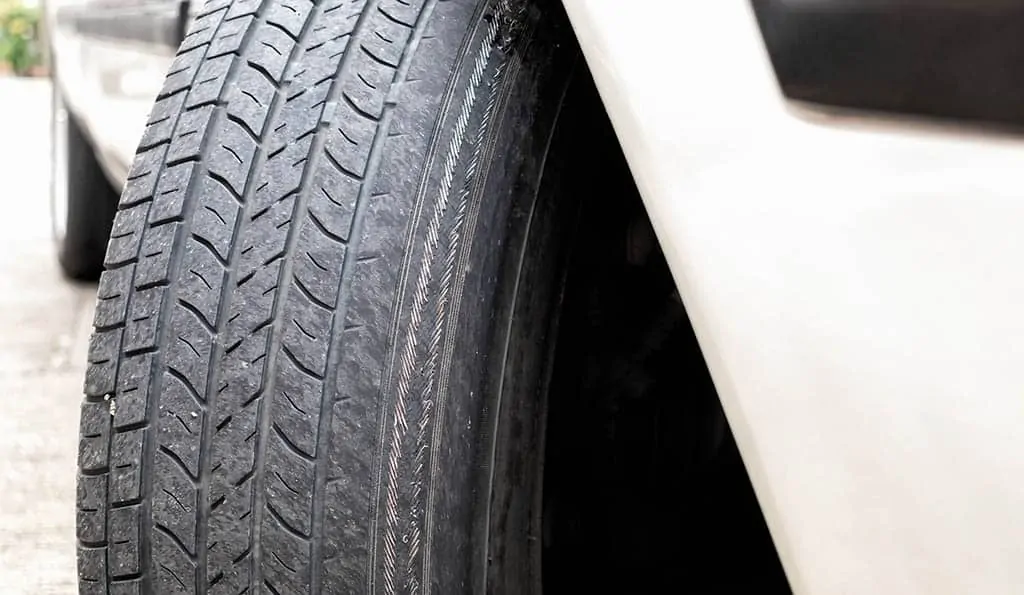
Tire tread should be uniform and even. That means that neither the inside or outside should be wearing faster than the other.
In conjunction with that, when you run your hand up or down the tread (think of the motion you’d use to pet a dog or cat) it should be smooth without roughness in either direction against your hand. There shouldn’t be low or high spots and all tread should be above the tread wear bars that can be found across the entire tread patch.
A good rule of thumb is that if one side of the tread is lower than another, you always decide when to replace the tire by judging the thinnest section of the tread.
Sidewall Problems
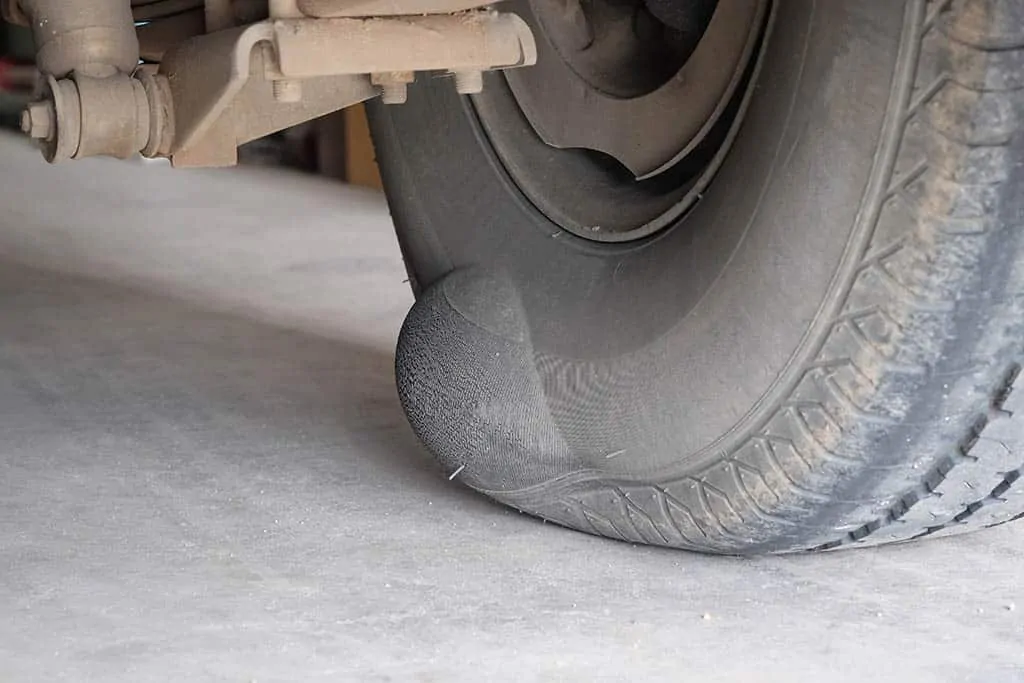
The sidewall of your tire is vital to the performance of the tire. There are mechanical bands inside the rubber that allow the sidewall to accept major impacts and forces without permanently deforming. When one of these bands breaks or the sidewall actually impacts another object you may see a bubble or blister on the sidewall develop.
This indicates the internal failure of the tire and needs to be replaced as soon as possible. There is no telling when that weakened section of the tire will finally blow and you’ll be stranded.
Age
Did you know that you can actually tell how old your tire is just by looking at the side of it? On every tire sold in America and most other countries, you’ll find a D.O.T. number that provides vital information to the government and manufacturer about where the tire was made, when it came off the assembly line and when it was completed and shipped off to be sold.
Look for a four-digit number on the sidewall. The first two numbers are the week and the second two numbers are the year of construction. That number on the image above is 3614. That means that the tire was constructed in the 36th week of 2014. Across the world, tire manufacturers agree that tires should be replaced no longer than 6 years after they’re created.
No matter the type of use they’re exposed to, the rubber and other materials break down and quite simply need to be replaced to stay safe.

 Learn About R1234YF Refrigerant aka The New Freon For Cars
