Steering System Repair in Mays Landing, NJ

Steering system and steering column repair in Mays Landing for pulls, sloppy steering, EPS warning lights, rack-and-pinion concerns, and column noises. ASE-certified, steering checks as needed before any rack quote, Opus scan tool EPS module scan.

ASE-certified AAA Approved Facility NJ Inspection Station Family-Owned Since 1981 4.8-Star Google Rating

Start here

Steering repair that sells the failed part, not the system

Sloppy steering is the most over-quoted complaint in a steering bay. Half the rack-and-pinion quotes on the street are actually outer tie rod ends at a fraction of the cost. The diagnostic walks the symptom back to the failed part before any major hydraulic component gets put on a written estimate.

What this covers

  • Pry bar tie rod check when the symptoms call for it
  • Opus scan tool EPS scan reads torque and angle sensors
  • Dry-park test separates a binding shaft from a binding rack
  • Power steering flush at every hydraulic component swap
  • Steering angle sensor reset on every tie rod or rack job

When to schedule

  • Vehicle pulls left or right on level pavement, especially at highway speed
  • Steering wheel feels loose or sloppy with play before the wheels begin to respond
  • Clunking, popping, or knocking from the front end over bumps or while turning

Why Kneble's

  • ASE certification
  • Opus scan tool scan tool with EPS module access
  • Visual and mechanical checks on steering parts as needed
  • AAA Approved Auto Repair, independently audited
  • Family-owned, woman-owned in Mays Landing since 1981

Service process

The four-step steering repair process

A steering complaint can come from tires, alignment, suspension, the hydraulic or electric assist system, the column, or the rack itself. The order of the diagnostic matters more than the replacement on the invoice. The process below is how steering work gets scoped in the bay.

  1. 01

    Inspect

    Visual and mechanical checks on steering parts as needed. Visual on the rack housing, the boots, the power steering hoses, and the intermediate shaft. Tire wear pattern read on the lift because uneven inner-edge wear pinpoints worn outer tie rod ends before the driver feels them.

  2. 02

    Diagnose

    Opus scan tool plugs into the OBD-II port and queries the EPS module for stored fault codes, torque sensor output, steering angle sensor position, and motor current draw. Dry-park steer test runs with the engine on and the vehicle stationary while a tech feels the intermediate shaft for binding. Hydraulic systems get a pressure check at the pump and a fluid condition read.

  3. 03

    Repair

    Repair scope follows the diagnostic. A worn outer tie rod end gets a tie rod replacement, not a rack quote. A binding intermediate shaft gets an intermediate-shaft replacement, not a rack quote. A confirmed internal rack failure gets a rack-and-pinion replacement with a full system flush. EPS module faults route to the harness, the connector, the sensor, or the module itself depending on the stored code.

  4. 04

    Verify

    Steering angle sensor reset on every steering job and a four-wheel alignment on every job that disturbs front-end geometry. Post-repair scan to confirm no stored EPS or stability control codes returned. Road test on Somers Point Road for pulls, return-to-center behavior, on-center feel, and any residual noise.

What we cover

Steering services we handle in Mays Landing, NJ

Steering column and column subassemblies

Column-side wear items including the tilt mechanism, the multi-function switch, the ignition lock cylinder, the clock spring, and the upper and lower column bearings. Most column complaints are subassembly swaps, not full column replacements.

Common examples: Tilt mechanism repair and adjustment, Clock spring replacement (SRS-paired on some platforms), Ignition lock cylinder replacement, Multi-function switch replacement (turn signal, wiper, headlamp stalk), Column bearing replacement for grinding or notchy steering feel

Hydraulic and electric power steering

Power steering pump replacement, hose and fitting repair, fluid flush, and reservoir service on hydraulic systems. EPS module scan, torque sensor diagnostics, and motor or assist module replacement on electric systems.

Common examples: Power steering pump replacement, Power steering hose and fitting replacement, Power steering fluid flush with full system clear-out, EPS module scan and stored fault code read, EPS torque sensor and motor assist diagnostics

Rack, linkage, and front-end joints

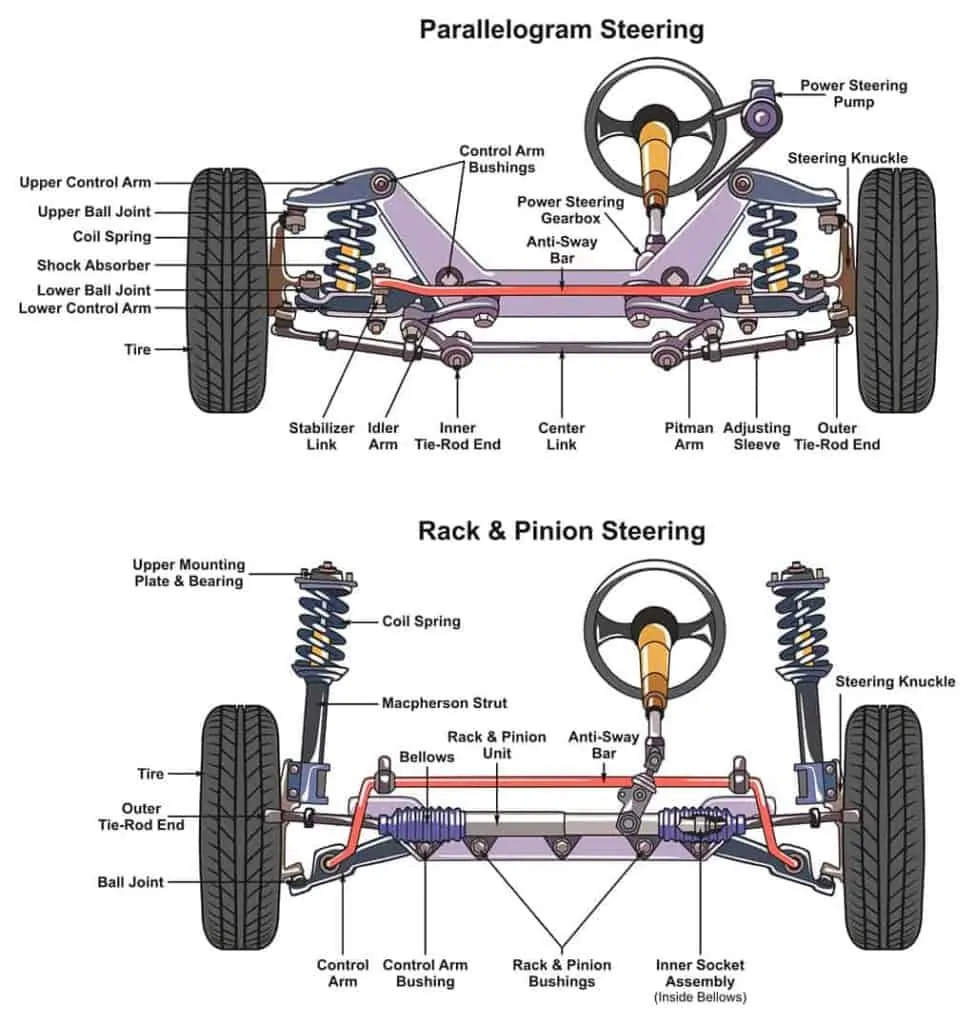
Outer and inner tie rod ends, idler arms, pitman arms on older platforms, and rack-and-pinion replacement when internal failure is confirmed. Intermediate shaft replacement when the dry-park steer test points to U-joint wear or dry slip-splines.

Common examples: Outer and inner tie rod end replacement, Rack-and-pinion replacement when internal failure is confirmed, Intermediate shaft replacement for binding or U-joint wear, Idler arm and pitman arm work on body-on-frame platforms

Steering angle sensor and alignment integration

Every steering job that disturbs front-end geometry gets a four-wheel alignment, and every alignment gets a steering angle sensor reset so stability control reads the new center point correctly.

Common examples: Steering angle sensor calibration after every steering or alignment job, Four-wheel alignment on a Hunter rack, Stability control fault code clear and post-repair verification, Lane-keeping system check on newer vehicles after steering work

Symptom-to-cause map for steering faults

Most steering complaints map to one of seven root causes. The pre-quote inspection identifies the root cause before any major hydraulic or rack component goes on a written estimate.

Sloppy or loose steering feel

Play in the wheel before the front wheels respond. Almost always a worn outer tie rod end, an inner tie rod, or a worn idler arm on older platforms. Almost never a rack-and-pinion failure when the joints get checked properly under load.

Pull to one side on level pavement

A pull is usually a tire issue, an alignment issue, or a brake drag issue before it is a steering issue. Tire rotation, pressure check, and alignment read run before the rack gets blamed.

Clunk or pop while turning

CV joints, sway bar end links, strut mounts, and outer tie rod ends all clunk on the same vehicle in similar driving conditions. Dry-park steer test isolates the source before any part comes off.

Whine, groan, or squeal that changes with steering

Hydraulic systems whine on low fluid before they whine on a worn pump. A fluid level check and a system pressure read separate the two. Belt squeal that worsens during steering is a belt or tensioner issue, not a steering issue.

EPS warning light or stability control fault

A stored EPS fault code names the failed component. A skipped steering angle sensor reset after an alignment is the most common cause of a stability control fault that returns on the first highway drive after the appointment.

Sticky spot through the steering range

A sticky spot that comes and goes is almost always intermediate-shaft binding from a dry U-joint or a rusted slip-spline, not an internal rack problem. Dry-park steer test pinpoints the binding in five minutes.

New pump fails six months after a rack replacement

Contaminated fluid from the old rack lived in the lines until it got pulled into the new pump. The fix on every major hydraulic replacement is a full system flush at the same labor visit so the new part starts with clean fluid.

Steering wheel jam at startup

Often a steering lock or ignition lock cylinder issue, not a column-shaft or rack issue. The fix is usually a key-and-cylinder service rather than a column replacement.

Steering wheel hard to turn at low speed or parking

Heavy steering at parking-lot speeds points at the assist system, not the rack. On hydraulic cars, low fluid, a glazed or stretched serpentine belt, or a failing pump drops assist pressure. On electric power steering cars, a loss of motor assist from a torque sensor fault or a stored EPS code drops assist completely. A five-minute fluid level check and a scan tool read separates the four causes before any pump or module gets quoted.

Two or more symptoms at once, have the steering parts checked first. A rack quote written without an inspection is a parts-swap shop quote, not a diagnostic-shop quote.

Steering repair for Mays Landing and Atlantic County drivers

Kneble's Auto Service Center has been on Somers Point Road in Mays Landing since 1981. Service area covers Mays Landing, Hamilton Township, Egg Harbor Township, Northfield, Somers Point, Folsom, Buena Vista, and the rest of Atlantic County. South Jersey roads put steering systems through a specific failure pattern. The Black Horse Pike, Route 40, Route 322, and the county roads through the Pine Barrens develop deep potholes after every freeze-thaw cycle, and the impact loads outer tie rod ends, rack mount bushings, and intermediate-shaft U-joints faster than highway driving does. Shore-air humidity and winter road salt accelerate slip-spline corrosion in the intermediate shaft, which is why sticky-spot complaints peak in late winter and early spring. Short-trip commute patterns common in the county leave hydraulic systems with low working-temperature time, which lets condensation collect in the fluid and accelerates pump wear. The shop runs visual and mechanical checks on steering parts as needed, plus an EPS scan when the symptoms call for it, because in this climate the right repair is rarely the most expensive one.

Helpful details to mention

  • Vehicle pulls left or right on level pavement, especially at highway speed
  • Steering wheel feels loose or sloppy with play before the wheels begin to respond
  • Clunking, popping, or knocking from the front end over bumps or while turning

Customer proof

Service was performed quickly and the Kneble Team provided great communication throughout the visit.
Robert Orzechowski, Google review

Questions before scheduling?

Talk with us about Steering System Repair

Tell us what you drive, what you are noticing, and when you would like to come in. We will help you choose the right next step.

Service guide

Steering System Repair Service Guide

Use this guide to review service factors, related videos, local driving conditions, and questions to ask before scheduling service.

01 of 05, The loaded-and-unloaded

The loaded-and-unloaded tie rod check, explained

Sloppy steering is the single most over-quoted complaint in a steering bay. A driver describes play in the wheel, the service writer punches it into the system, and the estimate comes back with a rack-and-pinion replacement on the line. Half the time the rack is fine. The actual failure is a worn outer tie rod end at a fraction of the rack quote.

Read more about The loaded-and-unloaded tie rod check, explained

Why the eyeball test misses worn joints

The test most shops run goes like this: the wheel is hoisted off the ground on a lift, a hand grabs the tire at three and nine o'clock, and the tech wiggles. If the wheel moves, it gets called a worn tie rod or a worn rack. If it does not move, the inspection passes. Eyeballing the tie rod while the wheel is off the ground misses worn joints because the bearing load that exposes wear is gone. A joint that looks tight unloaded can have play that the suspension only develops under real cornering load.

What loaded-and-unloaded actually means

The proper standard for a steering inspection is the loaded-and-unloaded check. Loaded means the suspension is at ride height, supported on a drive-on rack or on stands at the lower control arms, with the wheel weight pressing the joints into their normal working position. Unloaded means the suspension is hanging free with the wheel off the ground. Each tie rod, ball joint, and idler arm gets checked in both states with a pry bar at the joint, not by wiggling the wheel.

How the five-minute check works

ASE-certified technicians run these visual and mechanical checks when the symptoms call for it. Five minutes per side. Pry bar at the outer tie rod, then the inner tie rod, then the lower ball joint, then the upper ball joint on platforms that have one. Look for movement at the joint itself, not at the wheel. Movement at the joint is wear. Movement at the wheel without movement at the joint is usually a rack mount bushing or an intermediate-shaft U-joint.

Safety note on driving with a known worn tie rod

A failed outer tie rod at highway speed is the failure mode that ends in a guardrail. The wheel turns inward, the car pulls hard one way, the driver loses steering. If the loaded-and-unloaded check finds play, do not put highway miles on the car before the repair. The cost of the tie rod replacement is small compared to the cost of the alternative.

Back to guide topics

02 of 05, EPS module

EPS module scan and steering angle sensor calibration

Electric power steering systems store fault codes the way an engine does, and the codes live in a dedicated module a generic OBD-II scanner cannot reach. The Opus scan tool reads the EPS module data the way a dealer-level scan tool does, including torque sensor signal, steering angle sensor position, and any stored EPS fault codes. After any tie rod, rack, or wheel alignment with steering angle sensor reset, the steering angle sensor needs a calibration so the stability-control system reads the new center point correctly.

Read more about EPS module scan and steering angle sensor calibration

What the EPS module stores

The EPS module is its own networked computer on the CAN bus. It logs torque sensor output, steering angle sensor position, motor current draw, ambient temperature, and a stack of fault codes that only fire under specific conditions. A generic code reader pulls engine codes; it does not query the EPS controller. Pulling the wrong scanner produces a clean code report and a customer who leaves with the warning light still on three days later. Real EPS module diagnostics need a platform-aware scan tool.

Torque sensor and steering angle sensor: two sensors, one safety system

The torque sensor measures how hard the driver is twisting the wheel. The steering angle sensor measures how far the wheel is from center. The EPS module reads both and applies motor assist accordingly. Stability control reads the steering angle sensor independently to know which way the driver is trying to go versus which way the car is actually going. When the two disagree, stability control corrects. A miscalibrated steering angle sensor sends stability control the wrong intended-direction signal, and the system either over-corrects or under-corrects.

Why the reset matters after steering or alignment work

Removing a tie rod, replacing a rack, or adjusting alignment changes the relationship between the wheels and the steering column. The center point of the steering wheel may now correspond to a different actual wheel angle than the sensor was last calibrated to. A skipped steering angle sensor reset is the reason a brand-new alignment can still throw a stability-control fault on the first highway drive after the appointment, or a lane-keeping system can drift to one side on newer vehicles. The reset takes minutes with the right scan tool and is part of every steering-related job at the shop, not a separate line item.

Platform notes: BMW, Mercedes-Benz, Audi, and Volkswagen calibration

Generic OBD-II scanners cannot reset the steering angle sensor on most European platforms. BMW EPS modules require a coded reset through the body or chassis control module. Mercedes-Benz direct-steer (variable-ratio) systems need a guided procedure that pairs the SAS with the EPS controller and the ESP module. Audi quattro and Volkswagen platforms use a basic-settings adaptation that fails silently if the front wheels are not exactly straight on a level surface. The Opus scan tool runs the guided procedure on all four manufacturers, and the shop does not release a European car after a steering or alignment job until the post-repair scan returns clean across EPS, ESP, and lane-keeping.

Back to guide topics
Not sure which symptom matters most?

Tell us what changed, when it started, and what you drive. We can help decide whether to start with an inspection, alignment check, or related repair.

03 of 05, Fluid contamination

Fluid contamination and intermediate-shaft binding (the two failure modes misdiagnosed as rack failure)

Two failure modes get quoted as a rack-and-pinion replacement when they are not rack problems. Both are diagnosable in minutes by a tech who knows to check. Both routinely walk out of chain shops as expensive parts swaps that did not address the actual cause.

Read more about Fluid contamination and intermediate-shaft binding (the two failure modes misdiagnosed as rack failure)

Fluid contamination after a rack replacement

A worn rack puts seal material and internal metal debris into the power steering fluid over its last 20,000 miles. The pump pulls that debris back through itself on every cycle. When the rack finally gets replaced, the lines are still full of contaminated fluid. Replacing a rack without flushing the system is the failure pattern that brings drivers back six months later with a destroyed new pump; the debris from the old rack lives in the lines until it gets flushed out. The fix is a full system flush at the time of any major hydraulic component replacement, including a hose-to-rack inspection for trapped sediment.

Intermediate-shaft binding

The intermediate shaft is the short shaft between the steering column and the rack. It has one or two U-joints and usually a sliding splined section that lets the shaft length change as the engine rocks on its mounts. When a U-joint dries out or a slip-spline rusts, the shaft binds intermittently through the range of motion. The driver feels a sticky spot in the steering that comes and goes. It feels exactly like an internal rack problem. The dry-park steer test (engine running, vehicle stationary, wheel slowly turned lock-to-lock while a tech feels the steering shaft for binding) is the five-minute test that separates a binding intermediate shaft from a binding rack. Intermediate-shaft replacement is a fraction of a rack job.

When the rack is the right answer

Internal rack leaks, torn mounting bushings, and confirmed internal binding are the three conditions where a rack replacement is the right call. Sloppy steering, sticky spots, and a pump that whines after a rack replacement are not. A diagnostic-first shop sells the failed part. A parts-swap shop sells the rack. The difference shows up in the second-opinion quote.

Pump whine vs hose seep vs rack leak

Three hydraulic failures sound and look similar from the driver's seat. A low fluid level whine comes from the pump cavitating; the cure is a fluid top-up after the leak source is identified, not a pump. A high-pressure hose seep weeps fluid down the back of the pump or onto the subframe; the fix is a hose replacement plus a top-up, not a pump. An internal rack leak puts fluid on the inner tie rod boots and turns them dark; the fix is a rack. The order of inspection is fluid level first, hose and reservoir visual second, rack boots third, pump pressure last. A pump that tests within spec on the pressure gauge is not the problem regardless of what it sounds like.

Back to guide topics

04 of 05, Power steering

Power steering fluid is not one fluid (ATF+4, Pentosin CHF, OEM PSF)

The auto-parts-store bottle labeled "power steering fluid" is the wrong fluid for a meaningful share of vehicles on the road. Topping a Chrysler or Jeep with universal PSF instead of ATF+4 swells the rack seals. Topping a BMW, Audi, VW, or Volvo with anything but Pentosin CHF 11S (or CHF 202 on later platforms) destroys the pump within months. The shop checks the cap, the owner's manual, and the platform spec before any fluid touches the reservoir.

Read more about Power steering fluid is not one fluid (ATF+4, Pentosin CHF, OEM PSF)

Three fluid families, not interchangeable

Most domestic and Asian hydraulic systems run a dedicated power steering fluid (Honda PSF-S, Toyota PSF, Ford Mercon V or specific Motorcraft spec). Chrysler/Jeep/Dodge platforms run ATF+4 in the steering system, not PSF. European hydraulic systems (BMW, Audi, VW, Mercedes-Benz, Volvo, Porsche, Mini) run Pentosin CHF 11S green or CHF 202 hydraulic fluid. Mixing families causes seal swell, foaming, or pump cavitation depending on which two fluids meet in the reservoir.

Why the wrong fluid kills a new rack

A rack replaced under warranty that fails again in six months is almost always a fluid-compatibility failure, not a parts failure. The new rack seals are formulated for the OEM fluid. Universal PSF poured into a Pentosin system softens the rubber until it leaks past the seal. The fix is a full system flush with the correct fluid at the time of any major hydraulic component replacement, and a label on the reservoir so the next quick-lube shop does not top with the wrong bottle.

Back to guide topics
Want this checked on your vehicle?

Tell us the year, make, model, and what you are noticing, and we will say what to check first.

05 of 05, Steering system

Steering system services and related spoke pages

Steering work splits into focused spoke pages plus the full rack, pump, and intermediate-shaft diagnostic we keep here. The linked pages below have the deeper part-specific detail.

Read more about Steering system services and related spoke pages
Back to guide topics
Need help deciding what applies to your vehicle?

Call the shop or request an appointment and include the vehicle year, make, model, mileage, and symptoms.

Ask about your vehicle

FAQs

Steering System Repair FAQs

What does steering column repair actually involve?

Most column repairs are subassembly swaps inside the column rather than a full column replacement: tilt mechanism, multi-function switch, clock spring, ignition lock cylinder, or upper and lower column bearings. A full column replacement is rare on a daily driver and almost always tied to collision damage or a specific factory recall.

Why does a sloppy steering quote often come back as a rack-and-pinion replacement?

Because the wrong inspection got run. The eyeball wiggle-the-wheel test misses worn outer tie rod ends because the load on the joint is gone when the wheel is hanging free. A pry bar check at each joint, run with the suspension at ride height, exposes the wear. A rack quote written without that check is a parts-swap quote, not a diagnostic quote.

Can I drive with the EPS warning light on?

Short distances at low speed, yes; the manual steering effort goes up but the vehicle is steerable. Highway speed, no; if the EPS fault drops assist mid-corner the effort change is sudden enough to surprise the driver. Schedule the scan before the next long drive.

How long does rack-and-pinion replacement take?

Plan a full day for most platforms, and longer on European vehicles with cradle-drop procedures. The labor includes the rack swap, hose checks, a full system flush, a four-wheel alignment, and the steering angle sensor reset that brings stability control back to a correct center point.

Hydraulic vs electric power steering: what is the difference at the shop?

Hydraulic systems use a belt-driven pump that pushes fluid through hoses to the rack; failure points are the pump, the hoses, the fluid, and the rack seals. Electric systems use a motor at the column or rack driven by the EPS module; failure points are the module, the torque sensor, the motor, and the harness. The diagnostic tool changes (pressure gauge for hydraulic, scan tool for electric), and the failure modes are different.

Why does the steering angle sensor need a reset after an alignment?

Adjusting alignment changes the relationship between the wheels and the steering column, so the center point of the wheel now corresponds to a different actual wheel angle than the sensor was last calibrated to. Skipped reset is the most common reason a brand-new alignment throws a stability-control fault on the first highway drive after the appointment.

What is the intermediate shaft and how does it fail?

It is the short shaft between the steering column and the rack, with one or two U-joints and usually a sliding splined section. When a U-joint dries out or a slip-spline rusts, the shaft binds intermittently and the driver feels a sticky spot in the steering. It feels exactly like an internal rack problem but is a fraction of the repair cost.

Steering wheel shakes at 55 to 70 mph: is that a steering problem?

Almost never. A shake that starts around 55 mph, peaks near 65, and fades above 75 is an out-of-balance wheel or a wheel-and-tire match-mount issue 90 percent of the time. A shake felt in the brake pedal under braking is a warped rotor, not a steering fault. A vibration tied to engine RPM is a driveline or axle issue. The few true steering causes (a worn outer tie rod or a separated belt inside a tire) show up on a mechanical steering inspection or a visual tire check, run as needed during the pre-quote diagnostic.

Further information

Learn more about Steering System Repair

Use these related articles and videos to compare symptoms, maintenance timing, warning signs, and questions to ask before scheduling service.

Local shop

Visit Kneble's in Mays Landing

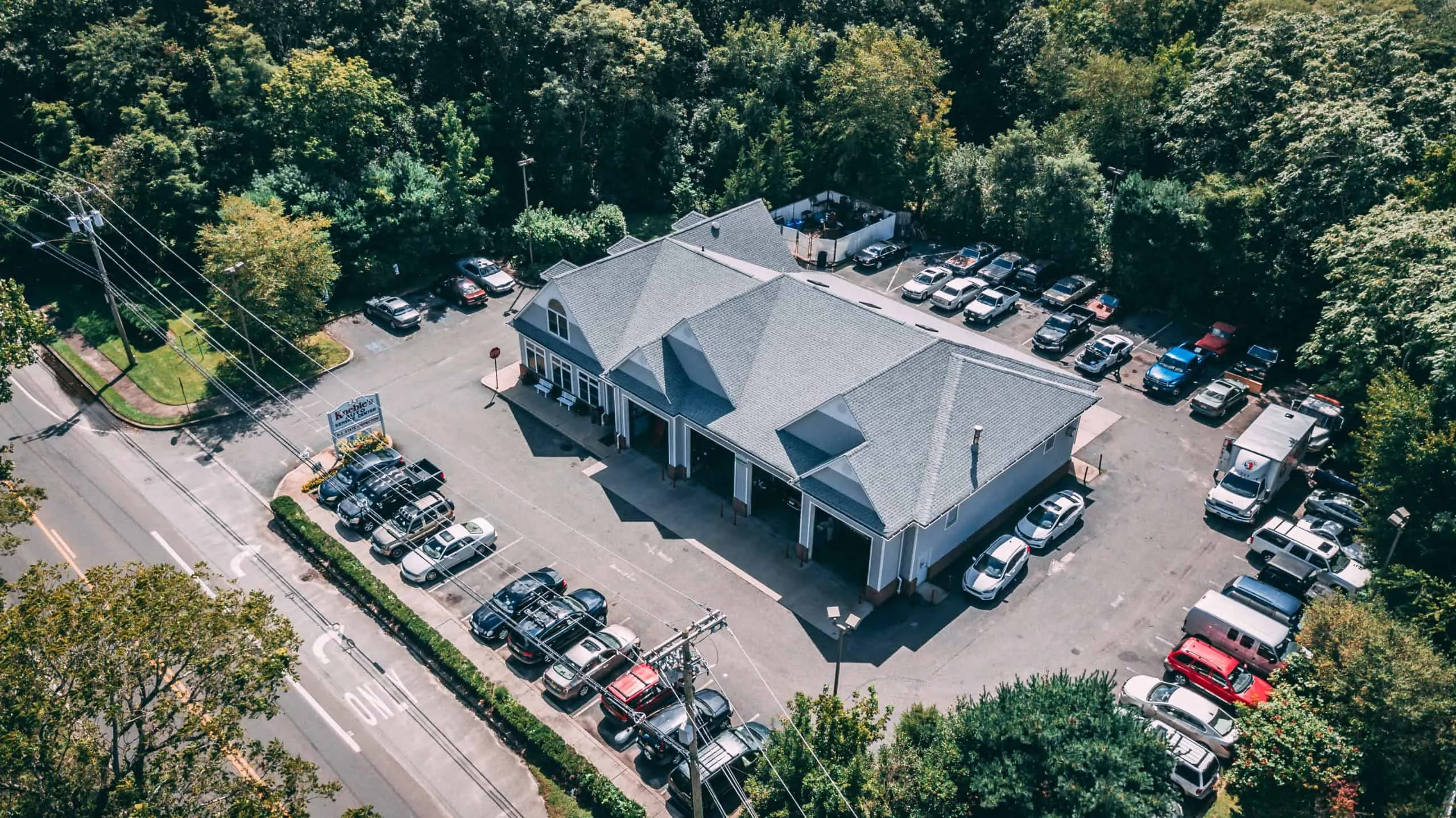
5473 Somers Point Road, Mays Landing, NJ 08330

Kneble's Auto Service Center is located at 5473 Somers Point Road, Mays Landing, NJ 08330 and serves drivers throughout Atlantic County and South Jersey.

  • Mon to Fri 8am to 5pm
  • Saturday 8am to 4pm
  • Sunday Closed

Reviews

Trusted by South Jersey drivers

Customers come to Kneble's for clear communication, practical recommendations, and repairs handled by a local team they can reach directly.

4.8 Google rating
351 Google reviews

Friendly receptionist. In and out within 45 mins.

Janet Jackson, Google review

Service was performed quickly and the Kneble Team provided great communication throughout the visit.

Robert Orzechowski, Google review

Excellent quick service by personable staff and very qualified techs at a reasonable charge.

Glenn Peterson, Google review

Very good service here. Treated us very well. Great conversation with Carmen.

Gary Mazzone, Google review

Ready When You Are

Call us or schedule online. Appointments recommended.

Schedule steering repair