If your vehicle is all-wheel drive, four-wheel drive, or rear-wheel drive, it has at least one differential. AWD vehicles have two differentials plus a transfer case or center differential. These components contain gear oil that breaks down over time, and when that fluid degrades, the gears inside grind harder, generate more heat, and wear faster. Eventually, a differential that was never serviced can fail, and that repair can be one of the most expensive drivetrain jobs on any vehicle.
The good news is that preventive differential service is straightforward and relatively inexpensive compared to the cost of repairing or replacing a differential. A fluid change at the right intervals keeps the gears properly lubricated, reduces operating temperature, and extends the life of the component significantly.
Most people know about oil changes, brake service, and tire rotations. Very few people have ever heard of a differential fluid change. That makes this one of the most commonly neglected maintenance items on any vehicle, and one of the easiest ways to prevent an expensive repair down the road.
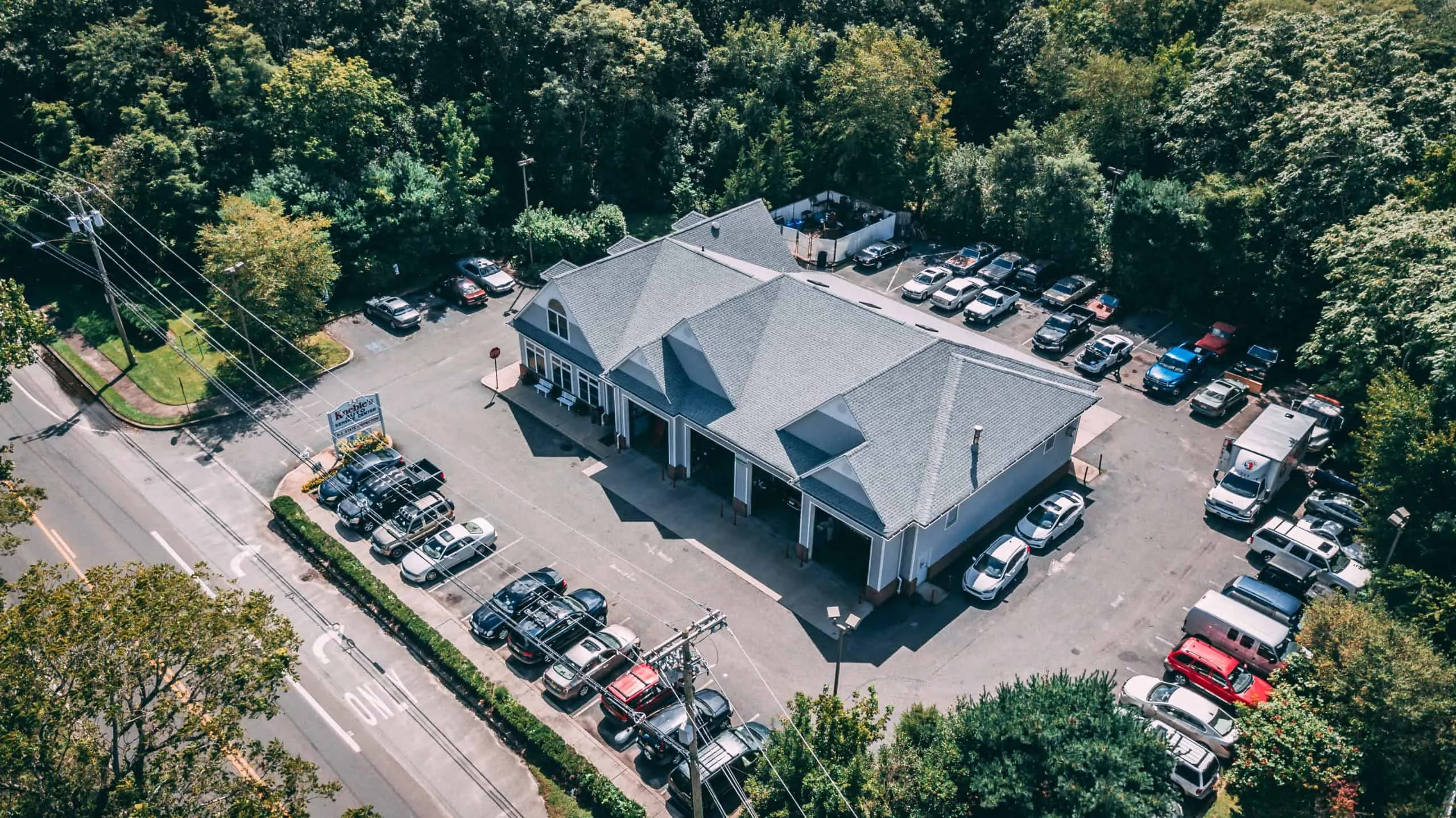
At Kneble’s Auto Service Center, we service differentials, transfer cases, and complete drivetrain systems on all makes and models.

What Is a Differential and What Does It Do?
When your vehicle goes around a corner, the outside wheels travel a longer distance than the inside wheels. The differential is the component that allows the wheels on the same axle to rotate at different speeds while still receiving power from the engine. Without a differential, the tires would scrub and skip through every turn, causing rapid tire wear and handling problems.
Every vehicle has at least one differential. Front-wheel drive vehicles have a differential built into the transmission (called a transaxle). Rear-wheel drive vehicles have a separate rear differential. All-wheel drive vehicles typically have a front differential, a rear differential, and a center differential or transfer case that distributes power between the front and rear axles. Four-wheel drive vehicles have front and rear differentials plus a transfer case.
Each of these components contains gear oil or fluid that needs to be changed at regular intervals. The gears inside operate under extreme pressure, and the fluid that lubricates them degrades from heat, contamination, and shearing forces over time.
Differential Fluid Change
The differential fluid change is the core service. We drain the old fluid, inspect the drain plug magnet for metal shavings (which can indicate abnormal wear), and fill the differential with the correct type and amount of fresh fluid. Some vehicles require conventional gear oil, while others require synthetic fluid or manufacturer-specific lubricants.
How often should differential fluid be changed?
Most manufacturers recommend every 30,000 to 60,000 miles, depending on the vehicle and driving conditions. Vehicles that tow, carry heavy loads, drive off-road, or operate in dusty or wet conditions (including beach driving) should be on the shorter interval.
Which vehicles need this service most?
Any vehicle with a separate differential housing, which includes all rear-wheel drive, all-wheel drive, and four-wheel drive vehicles. The brands we see most frequently for differential service include (Symmetrical AWD requires front, rear, and center differential service), (Dana axles with front and rear differentials plus transfer case), (F-150, Super Duty, Explorer AWD), BMW (rear-wheel drive and xDrive AWD), and trucks from all manufacturers.
Transfer Case Service for AWD and 4WD Vehicles
The transfer case is the component that distributes power between the front and rear axles on AWD and 4WD vehicles. It has its own fluid supply that is separate from the differentials and separate from the transmission. Transfer case fluid degrades over time just like differential fluid, and it needs to be changed at regular intervals.
Transfer case fluid service is often overlooked because many owners do not realize it exists as a separate component with its own maintenance need. The service interval is similar to the differential: every 30,000 to 60,000 miles, with shorter intervals for vehicles used in severe conditions.
If your vehicle is AWD or 4WD, it has a transfer case that needs service. This includes Subaru Outbacks and Foresters, Jeep Wranglers and Grand Cherokees, Ford Explorers and F-150s with 4WD, Toyota 4Runners and Tacomas, and any other AWD or 4WD vehicle.
Signs Your Drivetrain Needs Attention
Most drivetrain problems develop gradually, which means you may not notice them until they become significant:
Whining or humming from the rear of the vehicle. A rear differential that is low on fluid or has worn gears will produce a whining sound that changes with speed. The pitch typically increases as you accelerate and decreases as you decelerate. This noise is often most noticeable at highway speeds.
Clunking when shifting from park to drive or reverse. A clunk or thud when engaging the drivetrain can indicate worn universal joints, a worn differential, or excessive backlash in the gears.
Vibration at speed. While vibration can have many causes (tire balance, alignment, brake rotors), drivetrain issues such as worn U-joints, a bad center support bearing, or a damaged CV joint can also produce vibration that increases with speed.
Fluid leak under the vehicle. Differential fluid and transfer case fluid can leak from worn seals or gaskets. If you see dark, thick fluid pooling under the rear of the vehicle or near the center, it may be a drivetrain fluid leak.
Grinding or difficulty engaging 4WD. If your four-wheel drive system is hard to engage, makes grinding noises when shifting between 2WD and 4WD, or does not seem to work at all, the transfer case or its linkage may need service.
Tire wear on AWD vehicles. On vehicles like Subaru that require all four tires to be within 2/32 of an inch of each other, mismatched tire circumferences can stress the center differential and cause premature wear. If you have recently replaced tires unevenly on an AWD vehicle, the differential may have been affected.
Drivetrain Service for Popular AWD and 4WD Vehicles
Different vehicles have different drivetrain configurations and different service needs:
Subaru (Symmetrical AWD): Front differential fluid, rear differential fluid, and center differential/transfer clutch fluid all need changing. Subaru’s system is particularly sensitive to mismatched tire sizes, so maintaining consistent tire circumference across all four wheels is also a drivetrain maintenance item.
Jeep (4WD): Front Dana axle differential, rear Dana axle differential, and transfer case. Jeeps that see off-road use, beach driving, or water crossings need more frequent fluid changes. Water intrusion through axle breather tubes is a real concern for Jeeps that drive through standing water.
Ford F-150 and Super Duty (4WD): Front differential, rear differential, and transfer case. Trucks that tow heavy loads generate more heat in the differential and should be on the shorter service interval.
BMW (xDrive AWD and RWD): Rear differential and, on xDrive models, front differential and transfer case. BMW differentials use specific synthetic fluid that must meet BMW specifications.
Toyota 4Runner, Tacoma, Tundra (4WD): Front and rear differentials plus transfer case. Toyota trucks with the e-locker or rear locking differential have an additional service consideration.
Frequently Asked Questions About Drivetrain and Differential Service
The differential allows the wheels on the same axle to rotate at different speeds, which is necessary when turning. Without it, the tires would scrub in every turn. Every vehicle has at least one, and AWD/4WD vehicles have two or three.
Every 30,000 to 60,000 miles for most vehicles. Vehicles that tow, haul, drive off-road, or operate in harsh conditions should be on the shorter interval.
Whining or humming that changes with speed, clunking when shifting gears, fluid leaks under the rear of the vehicle, and vibration at highway speeds can all indicate differential problems.
A differential fluid change is one of the more affordable drivetrain services. The cost depends on the number of differentials your vehicle has and whether it requires conventional or synthetic fluid. We provide a clear price before starting any work.
Yes. The transfer case is a separate component with its own fluid that needs changing at regular intervals. It is commonly overlooked because many owners do not know it exists.
Yes. AWD systems, particularly Subaru’s, rely on all four tires having the same circumference. Mismatched tires create a constant speed differential between axles that forces the center differential to work harder and can eventually damage it.
Schedule Your Drivetrain and Differential Service
At Kneble’s Auto Service Center we always want to make the process of getting your car serviced as convenient as possible. If you need drivetrain and differential service, call us at (609) 625-3286 or schedule an appointment online.
We are able to accommodate those who desire to wait as we feature a comfortable waiting area complete with TV, complimentary refreshments, a library, a desk, and a charging station. And yes, we even have free Wi-Fi!
Please note that we offer a shuttle service within a 10-mile radius of the shop. This includes Pleasantville, Port Republic, Hammonton, and Buena and beyond!
Where to Get Drivetrain and Differential Service?
Our Address
5473 Somers Point Road
Mays Landing, NJ 08330
Our Hours
Monday – Friday: 8:00am – 5:00pm
Saturday:
8:00am – 4:00pm
Sunday: Closed