Air Conditioning Repair in Mays Landing, NJ

Car AC repair in Mays Landing for warm air, weak cooling, leaks, compressors, and climate-control faults. EPA Section 609 certified for R-134a and R-1234yf. We diagnose the leak first.

ASE-certified AAA Approved Facility NJ Inspection Station Family-Owned Since 1981 4.8-Star Google Rating

Start here

Auto AC repair without the runaround

Quick orientation before the details below. Skim the cards, then jump to the section that matches what you need.

What this covers

  • AC blowing warm or weak diagnosis
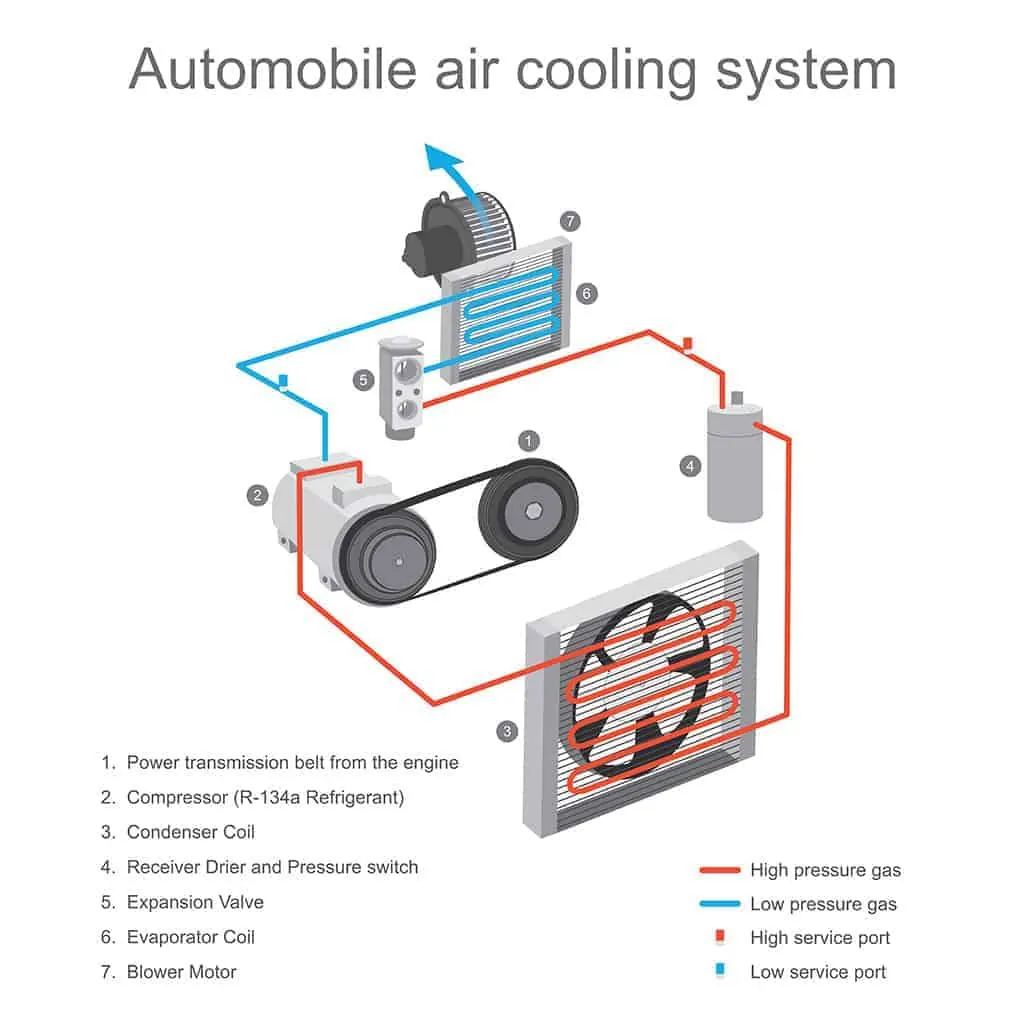
  • Refrigerant leak detection with UV dye and electronic sniffer
  • R-134a and R-1234yf recharge
  • Compressor, condenser, evaporator, and blower replacement
  • Climate-control module and pressure-switch diagnosis

When to schedule

  • AC blows warm or only mildly cool, even on max with the recirculation button pressed
  • Cold at idle and warm at highway speed (or the reverse), often a charge or condenser airflow issue
  • Squeal, click, or cycling noise when the AC switches on, often a failing clutch or low refrigerant

Why Kneble's

  • ASE-certified
  • AAA Approved Auto Repair facility
  • EPA Section 609 certified, R-134a and R-1234yf
  • Family-owned and woman-owned in Mays Landing since 1981
  • Robinair recovery machine, UV dye, and electronic sniffer on-site

Service process

Our four-step AC repair process

Plenty of shops will sell a recharge the same hour the car rolls in. We do four steps because a recharge without finding the leak puts R-1234yf back on the ground, and the system is sealed by design. If yours needed a recharge, something is leaking.

  1. 01

    Inspect

    Vehicle on a Rotary two-post lift. Visual on the compressor, condenser, hoses, and fittings. Belt tension and compressor-clutch engagement check. Cabin air filter pulled to rule out airflow problems before any refrigerant work starts.

  2. 02

    Diagnose

    Manifold gauges on the high and low side. UV dye injection plus a black-light scan for slow leaks. Electronic sniffer for fittings that are too tight for dye. We confirm refrigerant type from the VIN and the underhood label, and check pressures against the manufacturer spec for the vehicle.

  3. 03

    Repair

    Seal the leak, replace the failed component, or both. New O-rings at every opened joint. Compressor replacement includes a line flush to clear debris from the old compressor. The accumulator or receiver-drier gets replaced any time the system is opened to atmosphere.

  4. 04

    Verify

    Vacuum the system to 28 in-Hg for 30 minutes to pull moisture and confirm vacuum hold. Recharge to the manufacturer's specified weight, not until it feels cold. Vent temperature reading at the dash before the keys come back. Road test on Route 40.

What we handle

Auto AC services we handle

Eight bays, foreign and domestic, with EPA Section 609 certified handling for both refrigerant types. We cover the full job from leak detection through vent-temperature verification, not just the recharge.

Diagnose and leak detection

UV dye injection, black-light scan, electronic sniffer, manifold-gauge pressure read, and a road-test verification. The first hour figures out what is actually wrong before any parts get quoted.

Common examples: UV dye and black light, Electronic sniffer, Manifold gauges, Pressure-drop hold test

Recharge and refrigerant service

R-134a recharge on pre-2017 systems. R-1234yf recharge on 2017+ systems with a 1234yf-capable Robinair recovery machine. Pure recharge work is also handled as a standalone AC recharge service. We do not service one refrigerant type with the other type's equipment.

Common examples: R-134a recovery and recharge, R-1234yf recovery and recharge, EPA Section 609 certified, Weight-based charge to spec

Compressor, condenser, evaporator, and components

Compressor replacement with system flush. Condenser replacement after stone damage at the front of the vehicle. Evaporator replacement when the cabin smells musty and the leak traces inside the dash. Expansion valve or orifice tube replacement.

Common examples: Compressor + flush, Condenser replacement, Evaporator replacement, Expansion valve / orifice tube

Cabin comfort and electrical

Blower motor and resistor work. Cabin air filter replacement on every AC visit because a packed filter mimics a refrigerant problem from the driver's seat. Climate-control module diagnosis on European platforms with the Opus scan tool. Pressure-switch and relay diagnosis on the electrical side.

Common examples: Blower motor + resistor, Cabin air filter, Climate module scan, Pressure switch + relay

Referred to a dealer or HV specialist

Hybrid and EV high-voltage AC compressors run on traction-battery voltage and require de-energizing the pack for service. That work goes to the dealer or to a marque high-voltage specialist. Aftermarket cold-AC retrofit kits and custom AC installs go to a specialty shop. Cabin AC components on hybrids and EVs (blower, cabin filter, vent, climate module) stay with us.

Common examples: HV compressor on hybrids and EVs, Aftermarket cold-AC kits, Cabin-side AC on hybrids stays with us, 12V auxiliary battery work

If the Hyundai is blowing warm, the Nissan has a slow leak, or the Prius has a cabin filter that needs the airflow back, we have done that job here.

Signs your AC needs service

The AC system signals failure before it stops working. If any of these are showing up, get it checked before the first 90-degree day.

AC blows warm or only mildly cool

Low refrigerant from a slow leak, or a compressor clutch that no longer engages. The diagnostic step decides which one it is before any refrigerant goes in.

Cold at idle, warm at highway (or the reverse)

Cold-at-highway, warm-at-idle is almost always a dead electric cooling fan. The reverse usually points to a sticking expansion valve or an overcharged system. We test with manifold gauges during a road test.

Squeal or click when AC switches on

Loose belt, seized compressor pulley, or a clutch coil engaging without the compressor building pressure. A visual on the belt and pulley sorts it in a minute.

Weak airflow even when air is cold

Blower motor wearing out, blower resistor failing, or a packed cabin air filter. Often shows up as the fan only working on the highest setting (resistor) or not working at all (motor).

Musty smell from the vents

Microbial growth on the evaporator. A cabin filter plus an evaporator clean usually solves it. Ignored long enough the growth pulls into the cabin air and causes allergy symptoms.

Visible oil residue around AC fittings

Refrigerant carries oil with it. An oil ring at a joint is a leak signature. The dye scan locates the exact fitting before any parts are quoted.

AC worked yesterday, dead today

Fuse, pressure switch, or a sudden refrigerant loss from a burst hose. Diagnose first because the fix ranges from a fuse to a full component replacement.

Cabin fogging the defroster will not clear

Heater core leak or a stuck blend door mixing heated and cooled air. Often a combined heater-and-AC diagnostic; see the heating system for that side of the work.

Two of these at once, do not wait. A failing compressor can throw metal through the entire system and turn a single component swap into a full system replacement.

Auto AC repair near you in Mays Landing and Atlantic County

Same family, same eight bays, same corner of Mays Landing since 1981. We serve Hamilton Township, Egg Harbor Township, Northfield, Somers Point, Folsom, Buena Vista, and the rest of Atlantic County. Fred Kneble has been turning wrenches here for decades. Nancy Kneble runs the shop and the books. We hold ASE certification and AAA Approved status, and the technicians handling your refrigerant are EPA Section 609 certified under the Clean Air Act.

South Jersey summers are humid, which puts harder duty on the AC system than the same vehicle would see further west. When a car sits all winter and the AC has not been run in months, the first hot day is when a marginal compressor fails and a slow leak becomes a fast one. We catch most of these on the annual pre-summer check before the breakdown.

Salt-air corrosion is the other South Jersey factor. Vehicles that summer in Margate, Brigantine, Ocean City, or anywhere east of the Garden State Parkway pull salt fog through the grille all summer and the condenser corrodes from the front face inward. We catch pinhole condenser leaks during the dye scan that look exactly like a fitting leak until the black light hits the front of the radiator support.

Helpful details to mention

  • Vehicle year, make, model, and engine size
  • Mileage
  • How the AC is failing (warm, weak airflow, intermittent, noisy)
  • When the symptoms started and whether they are getting worse
  • Any DIY recharge cans already added (this matters for the diagnosis)
  • Whether the heater is also having issues (combo problem)
  • Whether the check engine light is on

The more we know up front, the more accurate the estimate.

Customer proof

Service was performed quickly and the Kneble Team provided great communication throughout the visit.
Robert Orzechowski, Google review

Questions before scheduling?

Talk with us about Air Conditioning Repair

Tell us the year, make, model, mileage, and what changed. If a low-cost item solves it, we book the visit and confirm on arrival. If the compressor or evaporator is in scope, we explain the full job before any work begins.

Service guide

Air Conditioning Repair Service Guide

Topic reference for the refrigerant types in play, why we diagnose the leak before we recharge, the compressor failure modes we see most often, the cabin air filter, and the EV scope.

01 of 08, R-134a vs

R-134a vs R-1234yf: which one your car uses and what it means for the bill

Vehicles built before 2015 generally use R-134a. Vehicles built after 2018 generally use R-1234yf. 2015 through 2017 is the transition window, and some builds in that range are split by trim. Since 2021, R-1234yf has been required in all new vehicles sold in the US under federal emissions rules because its global warming potential is much lower than R-134a.

Read more about R-134a vs R-1234yf: which one your car uses and what it means for the bill

The two refrigerants are not interchangeable. R-134a service equipment cannot legally service an R-1234yf system, and the EPA Section 609 certification covers both with separate handling protocols. We check the VIN and the underhood label before the recovery machine connects.

The cost math matters for you. A 1.5-pound R-1234yf recharge runs roughly three to four times the per-pound cost of R-134a. A leak that you might have topped off cheaply on the old refrigerant becomes an expensive ongoing cost on the new one. The economic incentive to find and fix the leak instead of recharging year after year is much stronger on 2017+ vehicles, which is exactly why we lead with diagnosis.

Back to guide topics

02 of 08, Why we

Why we diagnose the leak before we recharge

Most AC systems hold between one and two pounds of refrigerant. The system is sealed by design. If the system is low, refrigerant is escaping somewhere. The fix is finding the escape point, not topping up the loss.

Read more about Why we diagnose the leak before we recharge

A recharge without a leak hunt costs the refrigerant twice: once at the pump, once again next summer when the same leak empties the system. On R-1234yf vehicles, that math is hard to ignore. On R-134a vehicles, it still costs money and still puts refrigerant in the atmosphere.

UV dye plus a black-light scan finds the leak in most cases on the first inspection. Tight fittings that resist dye get checked with the electronic sniffer. Internal evaporator leaks that show no underhood evidence get found by pressurizing the system and reading drop rates on the manifold gauges. The diagnostic time is up front; the repair time is whatever the failure actually requires. AC recharge service is the same workflow on the recovery-and-fill side.

Back to guide topics
Not sure which symptom matters most?

Tell us what changed, when it started, and what you drive. We can help decide whether to start with an inspection, alignment check, or related repair.

03 of 08, Vacuum-hold and

Vacuum-hold and nitrogen leak-down: how we prove the system is sealed

Before any refrigerant goes back in, the system gets pulled to 28 to 29 inches of mercury on the Robinair recovery machine and held there for 30 minutes minimum. Pulling vacuum does two jobs at once: it boils any moisture out of the lines (water in an AC system reacts with refrigerant oil to form acid), and the hold-test confirms the system is actually sealed.

Read more about Vacuum-hold and nitrogen leak-down: how we prove the system is sealed

If the vacuum reading climbs during the hold, the system is still leaking somewhere we did not find on the dye scan. On stubborn cases we pressurize with dry nitrogen to roughly 150 psi and listen for the leak with an electronic sniffer, because nitrogen is cheap, inert, and will not contaminate the system. Only after the system holds vacuum does the manufacturer-specified weight of refrigerant get charged in.

Back to guide topics

04 of 08, Compressor failure

Compressor failure modes: clutch coil vs internal vs leak-by

When a customer says the compressor is bad, the compressor is usually one of three things, and the fix is different for each.

Read more about Compressor failure modes: clutch coil vs internal vs leak-by

Clutch coil failure

The compressor body is fine; the electromagnetic clutch that engages it has burned out. Symptom is no click from the front of the engine when the AC switch goes on. Hyundai and Kia past 80,000 miles see this most often. We replace the clutch assembly alone when the compressor itself checks out, which is a fraction of the cost of a full compressor swap.

Internal failure

The compressor pistons or vanes have seized or shed metal. Symptom is a knocking or grinding noise when the AC engages, sometimes a complete lock-up. The fix is a new compressor plus a system flush, because metal in the lines will damage the new compressor inside one season. Often pulls the condenser and the expansion valve into the job because both can trap debris.

Leak-by (no pressure build)

The compressor turns but does not build pressure. Symptom is a clutch that engages, a pulley that spins, and an evaporator that stays warm. Manifold gauges confirm low high-side pressure with the system running. The fix is replacement; this is not a rebuild candidate on most modern automotive compressors.

We test which one it is with gauges and a scan tool before parts get ordered.

Back to guide topics
Want this checked on your vehicle?

Tell us the year, make, model, and what you are noticing, and we will say what to check first.

05 of 08, Cabin air

Cabin air filter: the cheapest fix on the entire system

Most cars have a cabin air filter behind the glove box that takes ten minutes to swap. A leaf-and-pollen-stuffed filter chokes airflow into the cabin and mimics a refrigerant problem from the driver's seat. The AC is fine; the air just cannot reach you.

Read more about Cabin air filter: the cheapest fix on the entire system

We check the cabin filter on every AC visit because it is the first place a no-cold-air complaint can resolve before anyone touches the refrigerant system. On Hondas and Toyotas the filter is usually clean enough to skip; on vehicles parked under trees in South Jersey the filter often comes out matted with pine needles and tree pollen. A new filter at the same visit as any other AC work keeps airflow strong without an upcharge.

Full detail on the part on the cabin air filter replacement page.

Back to guide topics

06 of 08, AC works

AC works at speed but not at idle (or the reverse)

Two specific patterns with two specific causes. Worth knowing because the diagnostic path is different.

Read more about AC works at speed but not at idle (or the reverse)

Cold at highway speed, warm at idle

The condenser is not getting enough airflow. At highway speed, the wind through the grille cools the condenser. At idle, the electric cooling fan should pick up that job. If the fan motor or its relay is dead, the AC works only when the car is moving. The fix is usually a cooling-fan motor or a fan relay, not anything inside the AC system itself. See automotive cooling system repair for the cooling-fan side of the diagnosis.

Cold at idle, warm at highway

Less common, and usually points to a failing expansion valve or an overcharged system. The expansion valve regulates refrigerant flow into the evaporator. When engine speed pushes compressor speed up, a sticking valve cannot keep up and the evaporator pressures go off-spec. We test this with manifold gauges during a road test, not just at idle in the parking lot.

Either pattern is a real diagnostic clue. Mention which one you have when you call so we can plan the diagnostic time correctly.

Back to guide topics

07 of 08, Brand-specific AC

Brand-specific AC failure patterns we see in the bays

Read more about Brand-specific AC failure patterns we see in the bays

BMW IHKA climate module

BMW's Integrated Heating and Air Conditioning module logs a coded fault that has to be read with a scan tool that speaks BMW (the Opus scan tool on our bench does). A dead IHKA looks like a dead AC from the driver's seat but the refrigerant system is fine. Common past 100,000 miles on E90, F30, and X3 platforms.

Mercedes-Benz blend door actuator

Stripped plastic gears inside the blend-door actuator on W211, W212, and ML platforms cause one side of the cabin to blow hot while the other side blows cold, or the temperature lever to do nothing. The actuator is replaceable behind the dash without opening the refrigerant system.

Honda compressor clutch black-death

Honda and Acura compressors past 120,000 miles fail internally and shed black metallic debris through the entire system. The fix is never a compressor alone; it is a compressor, condenser, expansion valve, and full system flush. We see it most on Odyssey, Pilot, and Accord.

Audi and VW auxiliary cooling fan

A4, A6, Q5, and Tiguan platforms run a two-stage auxiliary cooling fan that drops to low speed when one fan controller fails. AC works at highway speed and dies in traffic. The fix is the fan controller, not the AC system.

Subaru evaporator drain

Outback and Forester evap drains clog with leaf debris and dump condensate onto the passenger floor. Looks like a heater-core leak, fixes with a drain clear.

Back to guide topics

08 of 08, EV and

EV and hybrid AC scope: what we do and what goes to the dealer

Hybrid and electric vehicle AC compressors run on the high-voltage traction-battery line, not the engine belt. Those systems require de-energizing the high-voltage pack before any compressor service, and the procedure requires factory training plus high-voltage personal protective equipment. That work goes to the dealer or to a marque high-voltage specialist; we say so on the phone before the car comes in.

Read more about EV and hybrid AC scope: what we do and what goes to the dealer

What stays with us on hybrids and EVs: cabin AC components (blower motor, blower resistor, cabin air filter), climate-control module faults that can be read through the OBD-II port (see check engine light diagnostics for the module-scan workflow), vent and duct work, condenser leaks on the low-voltage refrigerant side, and the 12V auxiliary battery that runs the cabin climate logic. Prius, RAV4 Hybrid, Highlander Hybrid, Ford Escape Hybrid, ID.4, e-Golf, and similar platforms all get cabin-side AC work in our bays.

If your hybrid or EV has a high-voltage compressor symptom, we will refer the job and tell you where. If it has a low-voltage cabin AC symptom, the diagnosis runs the same as any other vehicle.

Need an AC check this week before the heat hits?

Call (609) 625-3286
Back to guide topics
Need help deciding what applies to your vehicle?

Call the shop or request an appointment and include the vehicle year, make, model, mileage, and symptoms.

Ask about your AC

FAQs

AC repair FAQs

Why is my car AC blowing hot air?

The most common cause is low refrigerant from a slow leak. Other causes include a failed compressor clutch coil, a faulty pressure switch, a blown fuse, or a stuck blend door. Any of these can produce the same warm-air symptom from the driver's seat. We diagnose with manifold gauges, a scan tool, and a UV-dye leak check before recommending a repair.

How often should my car AC be serviced?

An annual inspection before summer is the right interval for most vehicles in South Jersey. The AC system is sealed and should not need refrigerant on a schedule, but the inspection catches small leaks and worn belts before they leave you sweating. A cabin air filter replacement at the same visit keeps airflow strong.

What are the signs my AC compressor is going out?

The clutch clicks but no cold air follows. A loud knocking or grinding from the engine bay when the AC switches on. Visible refrigerant or oil seepage from the front of the compressor. An AC that worked yesterday and is completely dead today. Any of these warrant a compressor-specific diagnosis rather than a recharge.

Why does my AC squeal when I turn it on?

Usually a loose or worn drive belt, or a seized AC compressor clutch pulley dragging on the belt. The fix is either a belt replacement or a compressor clutch replacement. A visual inspection of the belt and pulley tells us which one in a minute.

Do I need to recharge my AC every year?

No. The system is sealed. If you needed a recharge last year, there is a leak. Topping off without finding the leak puts the refrigerant on the ground and costs money every season. We find the leak first so the recharge sticks.

Can you service Hyundai, Nissan, BMW, and Mercedes AC systems?

Yes. We service domestic, Asian, and European AC systems daily. Our Opus scan tool reads the climate-control modules on luxury and European makes that some independent shops cannot communicate with. EPA Section 609 certification covers refrigerant handling on all of them.

Do you work on hybrid and electric vehicle AC systems?

Cabin AC components on hybrids and EVs (blower, cabin filter, vent system, climate module) are routine work and stay with us. The high-voltage AC compressor on those vehicles runs on traction-battery voltage and goes to the dealer or to a marque HV specialist; we will tell you on the phone before the car comes in.

How long does an AC recharge last?

On a properly sealed system, the original factory charge lasts the life of the vehicle. If a recharge was needed at all, there is a leak, and how long the new charge holds depends entirely on the leak rate. A pinhole at an O-ring might empty in two weeks. A slow seep at a fitting might hold through a season. That is why we find and fix the leak before the recovery machine puts refrigerant back in, instead of selling a recharge that goes out the same way it went in.

Further reading and viewing

Related Kneble's coverage for AC and HVAC owners

Air-conditioning and electrical content from the Kneble's library if you want to dig deeper.

Local shop

Visit Kneble's in Mays Landing

5473 Somers Point Road, Mays Landing, NJ 08330

Five minutes off Route 40 between the Hamilton Mall and Lake Lenape. Ten minutes from the Atlantic City Expressway Exit 17. Twelve minutes from EHT and Northfield. Fifteen minutes from Somers Point along Mays Landing-Somers Point Road. Freddy J's Bar & Kitchen is nearby at 5698 Somers Point Road if you want to grab food while the AC job is in the bay.

  • Mon to Fri 8am to 5pm
  • Saturday 8am to 4pm
  • Sunday Closed

Reviews

Trusted by South Jersey drivers

Customers come to Kneble's for clear communication, practical recommendations, and repairs handled by a local team they can reach directly.

4.8 Google rating
351 Google reviews

Friendly receptionist. In and out within 45 mins.

Janet Jackson, Google review

Service was performed quickly and the Kneble Team provided great communication throughout the visit.

Robert Orzechowski, Google review

Excellent quick service by personable staff and very qualified techs at a reasonable charge.

Glenn Peterson, Google review

Very good service here. Treated us very well. Great conversation with Carmen.

Gary Mazzone, Google review

Ready When You Are

Call us or schedule online. Appointments recommended.

Schedule AC service