What we handle
Transmission service and repair in Mays Landing, NJ
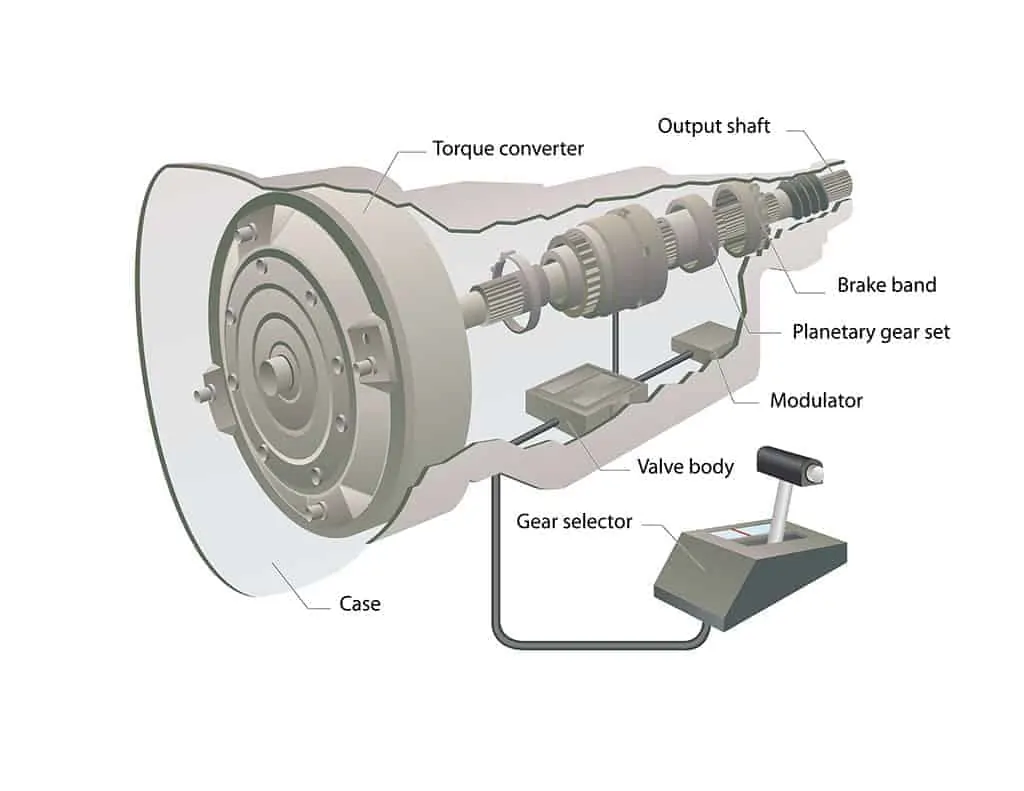
Eight bays, foreign and domestic, with the fluid library and scan tools to cover every common platform. The right ATF for the platform, the right method for the transmission.
Fluid and filter service
Drop-pan service with new filter or screen on units that have one. The right ATF for the platform, not universal parts-store fluid. Dexron VI, Mercon LV, ATF+4, ZF Lifeguard 8, Toyota WS, Honda ATF DW-1, JWS 3324, Subaru Lineartronic CVT-II.
Common examples: Platform-correct ATF, Filter or screen change, Pan gasket inspection, Magnetic plug clean
Fluid exchange and gravity fill
Fluid exchange machine on platforms where the OEM procedure allows it. Gravity drain and temperature-window fill on ZF 8HP, certain Aisin platforms, and most CVTs. The method depends on the transmission, not the customer preference.
Common examples: ZF 8HP temperature-window fill, Aisin AW gravity drain, CVT drain-and-fill, Mechatronic adaptation reset
Diagnostic and scan
P0700-series code review on the transmission control module before any service is quoted. Live data on shift events, lockup, line pressure, and solenoid duty cycle. Check engine light diagnostics for transmission-related codes.
Common examples: P0700-series scan, Live shift data, Lockup-event read, Valve body diagnosis
Cooler, lines, and replacement
Cooler line repair on leaks, auxiliary cooler installation on tow vehicles, radiator-internal cooler diagnosis when the radiator is the suspect. Reman or used replacement-unit installation when a rebuild is past the service window. Drivetrain and differential service picks up the work past the tail-shaft.
Common examples: Cooler line repair, Auxiliary cooler install, Replacement unit fit, Rebuild referral
If you drive a Honda Civic or Accord, a Toyota Camry or RAV4, a Subaru Outback with the Lineartronic CVT, a Ford F-150 with the 10-speed, a Chevy Silverado, a Hyundai Sonata, a Jeep Grand Cherokee or Wrangler with the ZF 8HP, an Audi A4 with the S-Tronic, or a BMW with the ZF 8HP, we know the platform and the correct fluid.
Signs your transmission needs service or repair
Transmission failures are progressive. The early symptoms are subtle and easy to ignore, but they are the cheap-to-fix window. Once the symptoms get loud, the bill grows. Eight symptoms we see most often, organized by what they tell us about the actual problem.
Delayed engagement when shifting into drive or reverse
You shift and the car sits for a beat before it moves. Worn clutches, low fluid pressure, or a failing pump. Catchable with fluid service if caught early.
Slipping (engine revs without acceleration)
The transmission cannot hold a gear. Often low fluid, worn clutches, or a failing solenoid. Do not drive on a slipping transmission; a single trip can ruin the converter, pump, or clutches.
Hard or harsh shifts
The shift slams instead of swapping smoothly. Solenoid, line pressure, or worn accumulators. Many platforms throw a P0700-series code at this point.
Torque converter shudder at 35 to 45 mph
Feels like rumble strips under light throttle. Lockup clutch slipping. On many modern platforms, a fluid service with the correct ATF restores lockup behavior; on older high-mileage units, the converter itself needs replacement.
Whining or humming that changes with speed
Internal bearing wear, low fluid, or pump issue. Sometimes catchable with fluid service if the noise has just started.
Red or brown fluid puddle under the car
Pan gasket, cooler line, output shaft seal, or pump seal. Pan and cooler line are usually straightforward; output shaft and pump seal are deeper jobs.
Check engine or transmission temperature warning
Trouble codes for solenoids, ratio errors, overheating, or P0700-series. Scan first, do not assume. The code is a starting point, not an answer.
Burnt smell from under the hood
Transmission fluid that has been overheated. Sweet to start, then sharp and acrid. Catch it now or face a rebuild.
Manual transmission: clutch slip, grind on shift, or pedal change
On a manual, RPM rising without speed under load is clutch slip; grind on the 1-2 or 2-3 shift is synchro wear or clutch drag; a pedal that has gone soft or sits low is hydraulic (master or slave cylinder). Each one points to a different repair.
Two or more at once, do not wait. A transmission that is slipping can ruin the converter, the pump, or the clutches in a single drive cycle. The diagnosis is cheap. The replacement is not.
Transmission service for Mays Landing and Atlantic County drivers
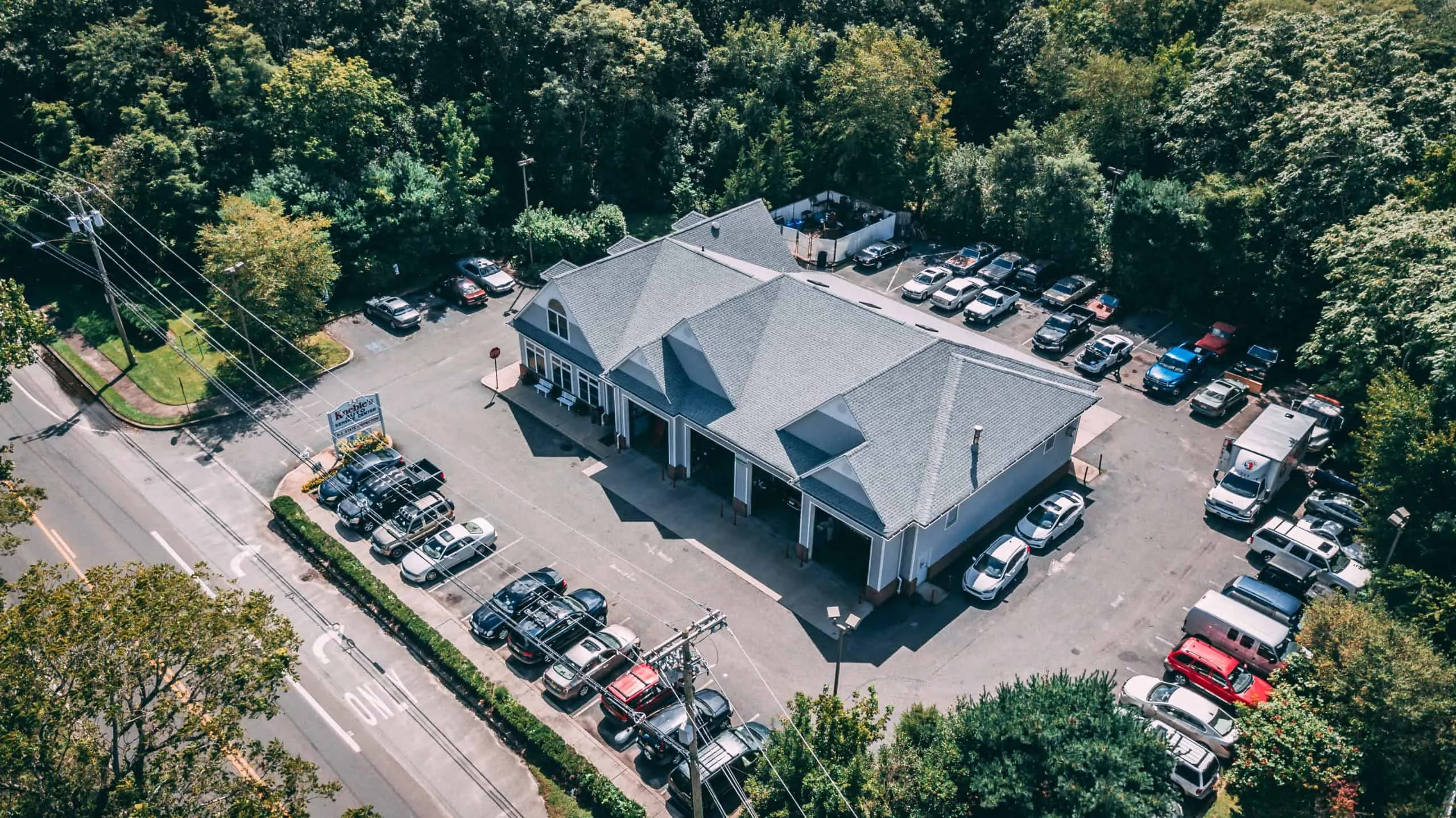
Same family, same eight bays, same corner of Mays Landing since 1981. We serve Hamilton Township, Egg Harbor Township, Northfield, Somers Point, Folsom, Buena Vista, and the rest of Atlantic County. AAA Approved Auto Repair status means we are independently audited on technician credentials and pricing, which matters on a job like this where chain shops sell rebuilds nobody needs.
Helpful details to mention
- Vehicle year, make, model, and trim (engine and transmission both matter)
- Mileage
- What you are feeling (slip, harsh shift, hesitation, shudder, no shift)
- When the symptom started and whether it is constant or intermittent
- When the transmission was last serviced, if you know
- Any check engine light or transmission warning that has come on
- Whether the vehicle tows or has towed
The more we know up front, the more accurate the estimate.
Customer proof
Service was performed quickly and the Kneble Team provided great communication throughout the visit.Robert Orzechowski, Google review
Questions before scheduling?
Talk with us about Transmission Services
Tell us what the car is doing and how long it has been doing it. If the symptom points to a solenoid and not a rebuild, we will tell you. If a flush will not fix the slip, we will say that too.
Service guide
Transmission Services Service Guide
Topic-by-topic reference for ATF identification, method selection, the four platforms with non-negotiable procedures, valve body and torque converter triage, the lifetime-fluid myth, and the rebuild-vs-replace math.
In this guide
- ATF identification: getting the fluid right for your platform
- Drop pan vs fluid exchange vs gravity drain: method by platform
- Transmission fluid change vs flush: what the terms actually mean
- Why "lifetime fluid" is a marketing term we usually disagree with
- ZF 8HP, Aisin AW, DSG, CVT: the four platforms that need platform-specific procedure
- Valve body wear and torque converter shudder: scan first, replace second
- When to service vs when to rebuild vs when to replace
01 of 07, ATF identification
ATF identification: getting the fluid right for your platform
The wrong ATF in a modern transmission damages clutches and seals within thousands of miles; the right fluid is platform-specific, not universal. The all-makes, all-models ATF on the shelf at the parts store is a marketing product, not an engineering one. Modern transmissions have specific friction modifiers tuned to specific clutch packs.
Read more about ATF identification: getting the fluid right for your platform
The common specs we keep on hand
- Dexron VI for most modern GM automatics from 2006 forward
- Mercon LV for most modern Ford automatics from 2008 forward
- ATF+4 for Chrysler, Dodge, Jeep, Ram automatics
- ZF Lifeguard 6 and Lifeguard 8 for ZF 6HP and 8HP (BMW, Land Rover, Jeep, Chrysler, Ram)
- Toyota WS for most modern Toyota and Lexus including the Aisin 6 and 8-speed
- Honda ATF DW-1 for Honda automatics; Honda is particularly intolerant of substitution
- JWS 3324 for certain Aisin platforms across Toyota, Lexus, and Volvo
- Subaru Lineartronic CVT-II for Subaru CVTs; not interchangeable with Nissan or Honda CVT fluid
Manual transmissions are a different story: most call for a GL-4 spec gear oil, a few want ATF, and a few (some Honda manuals) want the same Honda MTF spec they shipped with.
These specs are not cross-compatible. ATF+4, Mercon LV, and Dexron VI look alike in the bottle and behave nothing alike in the pan. Mercon LV in a Chrysler ATF+4 transmission produces harsh shifts within a thousand miles; Dexron VI in a Honda DW-1 application produces the same. The "multi-vehicle" ATF on the parts-store shelf is blended to meet the lowest common denominator of friction modifiers, which means it meets the spec for almost nothing.
02 of 07, Drop pan
Drop pan vs fluid exchange vs gravity drain: method by platform
Three legitimate service methods exist and each one belongs to specific platforms; using the wrong method on the wrong unit is its own failure mode. Drop-pan with a filter change leaves roughly 40 to 50 percent of the old fluid in the torque converter and cooler lines. A fluid exchange machine pushes the new fluid through while pulling the old fluid out, swapping nearly all of the old volume. Gravity drain and fill is the dealer-spec procedure on certain ZF and Aisin units where the fluid level has to be set at a specific temperature window.
Read more about Drop pan vs fluid exchange vs gravity drain: method by platform
The right method by platform
- Drop pan plus filter
- most older domestic automatics with a removable pan, under 100,000 miles, fluid still has color, no metal in the pan
- Fluid exchange machine
- many modern domestics and Asian platforms where the OEM allows it; best when fluid is degraded but unit is healthy
- Gravity drain and fill
- ZF 8HP, some Aisin platforms, and most CVTs; level set at a temperature window (typically 86 to 113 degrees on ZF 8HP) with the engine running and the unit in park or neutral
A unit with metal in the pan and a slipping symptom is past the service window. We will say so before we charge for a service that will not fix it.
Tell us what changed, when it started, and what you drive. We can help decide whether to start with an inspection, alignment check, or related repair.
03 of 07, Transmission fluid
Transmission fluid change vs flush: what the terms actually mean
A fluid change is a drop-pan drain that swaps roughly half the fluid and replaces the filter. A flush is a machine-driven exchange that pushes new fluid in while pulling old fluid out, swapping nearly all of it. Both are legitimate, neither is universally correct. The flush gets a bad reputation because shops have run high-pressure flushes on tired transmissions and dislodged varnish that clogged the valve body. On a healthy unit with degraded fluid, a proper exchange at OEM-spec pressure is fine. On a slipping or high-mileage unit, a drain-and-fill is the safer call. The deciding factor is the condition of the transmission, not which method sounds more thorough.
Read more about Transmission fluid change vs flush: what the terms actually mean
04 of 07, Why "lifetime
Why "lifetime fluid" is a marketing term we usually disagree with
Manufacturers spec "lifetime" because warranty period, not vehicle life; ZF and Aisin both publish their own service intervals at 60,000 to 100,000 miles. If you read the owner manual on a lot of newer cars (Honda, ZF-equipped BMW, certain VW DSGs, many Audis, a few Fords), you see "lifetime fluid" or "fill for life." There is no service interval listed.
Read more about Why "lifetime fluid" is a marketing term we usually disagree with
Here is the part the manual does not define: lifetime of what? Lifetime of the warranty is not lifetime of the car. ZF, the company that actually makes the 8HP transmission found in most BMWs, Jeeps, Rams, Land Rovers, and Audis, publishes its own service recommendation at 60,000 to 80,000 miles regardless of what the vehicle-manufacturer manual says. Aisin publishes similar intervals on its 6 and 8-speed automatics. The vehicle-manufacturer "lifetime" claim and the transmission-manufacturer interval are two different numbers, and the transmission manufacturer is the one whose engineers designed the clutch packs.
The cars we see come in at 120,000 miles on the original fluid almost always have shift quality issues. The fluid has been heat-cycled thousands of times, the chemistry is gone, friction modifiers are spent. The clutches grab harder, the converter shudders, the control module compensates by raising line pressure. By the time the driver feels it, the wear has happened. If the manufacturer says lifetime, budget a service at 60,000 to 80,000 miles anyway.
Tell us the year, make, model, and what you are noticing, and we will say what to check first.
05 of 07, ZF 8HP
ZF 8HP, Aisin AW, DSG, CVT: the four platforms that need platform-specific procedure
Each of these four common platforms has a non-negotiable service procedure that a generic fluid exchange machine cannot perform correctly.
Read more about ZF 8HP, Aisin AW, DSG, CVT: the four platforms that need platform-specific procedure
ZF 8HP (BMW, Jeep, Ram, Chrysler, Land Rover, many Audi)
Found across most BMW, Jeep, Ram, Chrysler, Land Rover, and many Audi platforms from the early 2010s forward. Gravity drain through the fill plug, refill with ZF Lifeguard 8 to the temperature window, basic-settings reset through the scan tool. The dealer procedure is the right procedure; the chain-shop fluid exchange is not. See BMW repair for the BMW side in more depth.
Aisin AW 6 and 8-speed (Toyota, Lexus, Volvo)
Common on Toyota, Lexus, Volvo, and several Aisin-supplied platforms. Toyota WS is the spec on most; JWS 3324 on others. Many of these are also temperature-window fills. The Toyota and Lexus dealer maintenance schedule disagrees with the customer-facing "lifetime fluid" claim; the service-shop schedule lists a 60,000-mile interval.
DSG (VW, Audi dual-clutch)
DQ250 wet-clutch variants (Jetta, GTI, Golf, several Audi siblings) need fluid and filter every 40,000 miles. DQ200 dry-clutch variants were spec'd as lifetime but field experience indicates a service interval still benefits the gearbox. After service we run the mechatronic basic-settings adaptation through the scan tool, which is what restores shift quality. See Volkswagen repair for the broader VW workflow.
CVT (Nissan, Subaru, Honda, Toyota)
Nissan (JATCO), Subaru (Lineartronic), Honda, Toyota, and a few others. Service intervals vary by manufacturer (often 30,000 to 60,000 miles, sometimes shorter under severe-service). The fluid spec is non-negotiable: Subaru CVT-II is not Nissan NS-3 is not Honda HCF-2. Internal CVT repair past fluid service is a specialist job; we refer those out.
CVT service intervals by manufacturer
- Nissan and Infiniti (JATCO JF015E, JF016E, JF017E)
- 30,000 miles severe service, 60,000 normal; NS-3 fluid required
- Subaru Lineartronic (TR580, TR690)
- 30,000 severe, 60,000 normal; CVT-II or High Torque spec, not interchangeable
- Honda CVT (Civic, HR-V, Accord hybrid)
- 30,000 to 40,000 miles; HCF-2 only
- Toyota CVT (Corolla, C-HR, RAV4 hybrid)
- 60,000 mile inspection; Toyota CVT FE or WS depending on platform
- Mitsubishi CVT (JATCO-supplied, Outlander, Lancer)
- 30,000 miles severe; CVTF-J4
Nissan CVT failures on the JATCO JF010E and JF011E (Altima, Sentra, Versa, Rogue, Pathfinder, Murano, late-2000s through mid-2010s) have been the subject of class-action settlements and extended warranties. If you own one, pull the fluid early and keep the records. We see these come in with shudder, whine, and judder under load; some are fluid-rescuable at low mileage, most are past the service window by the time symptoms show. We will tell you which side of the line your unit is on.
One ZF 8HP detail that surprises owners: the filter is integrated into the pan itself. There is no serviceable element to swap; the whole pan-and-filter assembly is the part. Every proper 8HP service replaces the pan, integrated filter, and pan gasket together, with a new fill-plug crush washer and fresh ZF Lifeguard 8. A shop quoting fluid-only service on an 8HP is leaving the filter in place past its service life.
ZF 9HP (Jeep Cherokee, Chrysler Pacifica, Land Rover, Acura, Honda Pilot)
The ZF 9HP launched with well-documented shift-quality complaints on the Cherokee, Pacifica, TLX, MDX, and Pilot. Many were addressed with TCM reflashes; some need solenoid or valve body work. Fluid is ZF-spec only, gravity drain with a temperature-window fill. If yours hunts between gears or refuses 9th, scan first; on these units the calibration is part of the diagnosis.
Honda 10AT and Hyundai/Kia 8AT
Honda's 10-speed (Odyssey, Passport, Pilot, Ridgeline, Accord 2.0T) uses Honda ATF DW-1 and is intolerant of substitution; the unit will protest with harsh shifts within a few hundred miles on the wrong fluid. Hyundai and Kia 8-speed automatics (Sonata, K5, Telluride, Palisade) call for SP-IV or SP-IV-RR depending on year and platform; aftermarket "universal" ATF is not equivalent and the TCM adaptation will not settle.
DQ500 wet-clutch 7-speed (Tiguan, Q3, Amarok, certain Golf R and S3 variants) takes a 40,000-mile service interval and a different fluid spec than DQ250; do not cross them. DSG service without the mechatronic basic-settings reset leaves shift quality worse than before the service.
The Aisin AWF8 (Volvo XC60, XC90, S60, S90, V60) calls for JWS 3324 with a temperature-window fill; Volvo updated the official service interval to 40,000 miles after the original "lifetime" claim. If your Volvo is past 60,000 miles on the original fluid, it is overdue.
06 of 07, Valve body
Valve body wear and torque converter shudder: scan first, replace second
Delayed engagement and 35-to-45 mph shudder both have fluid-related causes and mechanical causes; the scan tool tells us which. P0700-series codes are the transmission control module flagging a fault it has decided is significant enough to log. The code is a starting point, not an answer.
Read more about Valve body wear and torque converter shudder: scan first, replace second
A P0700 with sub-codes like P0741 (torque converter clutch performance) or P0734 (gear ratio incorrect) usually points to fluid first, hardware second. A P0700 with P0840 (transmission fluid pressure sensor) is a sensor or a wiring fault before it is internal wear. The shudder that owners feel as vibration between 35 and 45 mph is the lockup clutch slipping under partial torque; on many modern platforms, a fluid service with the correct ATF restores lockup behavior. On older units with high mileage, the converter itself is worn and needs replacement.
The point: scan the codes, drive the car with the scan tool live, read the live data, then quote the repair. Quoting a replacement before a scan is bad math and worse engineering.
07 of 07, When to
When to service vs when to rebuild vs when to replace
A failed solenoid is a repair; metal in the pan is a rebuild; cost-of-rebuild past 60 percent of replacement is a replacement. Each one means a different job.
Read more about When to service vs when to rebuild vs when to replace
The rough decision tree
- Service
- fluid is degraded, shifts are still clean, no metal in the pan, no P0700-series stored codes
- Repair
- a specific component has failed (solenoid, valve body, converter, output shaft seal, cooler line, mount); unit stays in the car
- Rebuild
- internal wear past the point a repair fixes; metal in the pan, codes across multiple parts, progressive slip; we coordinate with a transmission specialist (we do not rebuild in-house)
- Replacement
- reman or used unit installed in place of the failed one when the math says replace rather than rebuild
Transmission rebuilds and CVT internal repair both go to specialists we trust. Tesla and EV reduction-gear service is a different beast and goes to a marque shop. Modified or built transmissions belong at performance shops, not us.
Call the shop or request an appointment and include the vehicle year, make, model, mileage, and symptoms.
FAQs
Transmission Services FAQs
When I put the car in drive, it does not move. What could cause this?
A few faults could cause this: shifter linkage, internal transmission damage, or fluid low enough that the pump cannot build pressure. Either way it needs to be inspected by one of our ASE-certified technicians. If the car cannot be driven, call (609) 625-3286 and we can arrange a tow.
I feel like the engine is revving up between gears. What could cause this?
The transmission is slipping. Could be low fluid, a worn clutch pack, or a failing solenoid. Make an appointment so we can scan for codes and confirm the cause before quoting a repair.
I hear a high-pitched whine that increases with speed and changes with shifts. What could cause this?
Often a clogged screen or filter, a worn internal bearing, or a pump issue. Needs scan-tool diagnosis plus a road test before we quote.
How often should transmission fluid be changed?
Depends on the platform. Most automatics call for service every 30,000 to 60,000 miles. Some manufacturers list "lifetime fluid" with no interval, which we typically disagree with (covered in the service guide above). CVTs and ZF 8HP units have specific intervals and specific fluids. Tell us the year, make, and model and we will give you the right answer.
Should I flush a transmission with 150,000 miles on the original fluid?
Depends on how it is shifting. If shifts are still clean, yes, with the manufacturer-specified fluid using the right method for your platform. If the transmission is already slipping, a flush will not fix it and can make a marginal unit fail faster. We scan first, then make the call.
Is a fluid exchange always better than a drop-pan service?
No. A fluid exchange swaps more fluid but uses pressure that some platforms do not tolerate. ZF 8HP, certain Aisin units, and most CVTs are drain-and-fill or gravity-fill platforms by OEM spec. The method depends on the transmission, not the customer preference.
Do you do transmission rebuilds in-house?
We do not. Internal rebuilds go to a transmission specialist we coordinate with. We handle fluid service, leak repair, solenoid and valve body work, torque converter replacement, cooler work, and replacement-unit installation. When the math points to a rebuild, we walk you through the options and the rebuild specialist estimate.
Further reading and viewing
Related Kneble's coverage for transmission and drivetrain
Transmission and drivetrain content from the Kneble's library if you want to dig deeper.
Local shop
Visit Kneble's in Mays Landing
5473 Somers Point Road, Mays Landing, NJ 08330
Five minutes off Route 40 between the Hamilton Mall and Lake Lenape. Ten minutes from the Atlantic City Expressway Exit 17. Twelve minutes from EHT and Northfield. Fifteen minutes from Somers Point along Mays Landing-Somers Point Road. Freddy J's Bar & Kitchen is right next door at 5698 Somers Point Road if you want to grab food before or after the appointment.
- Mon to Fri 8am to 5pm
- Saturday 8am to 4pm
- Sunday Closed
Reviews
Trusted by South Jersey drivers
Customers come to Kneble's for clear communication, practical recommendations, and repairs handled by a local team they can reach directly.
Friendly receptionist. In and out within 45 mins.
Janet Jackson, Google review
Service was performed quickly and the Kneble Team provided great communication throughout the visit.
Robert Orzechowski, Google review
Excellent quick service by personable staff and very qualified techs at a reasonable charge.
Glenn Peterson, Google review
Very good service here. Treated us very well. Great conversation with Carmen.
Gary Mazzone, Google review