
Table of Contents
Your car is equipped with multiple electrical circuits that provide power to nearly every system in your car including:
- The Starting and Charging System
- Lighting System
- Ignition System
- Heating & Air Conditioning System
How Your Car’s Electrical System Works
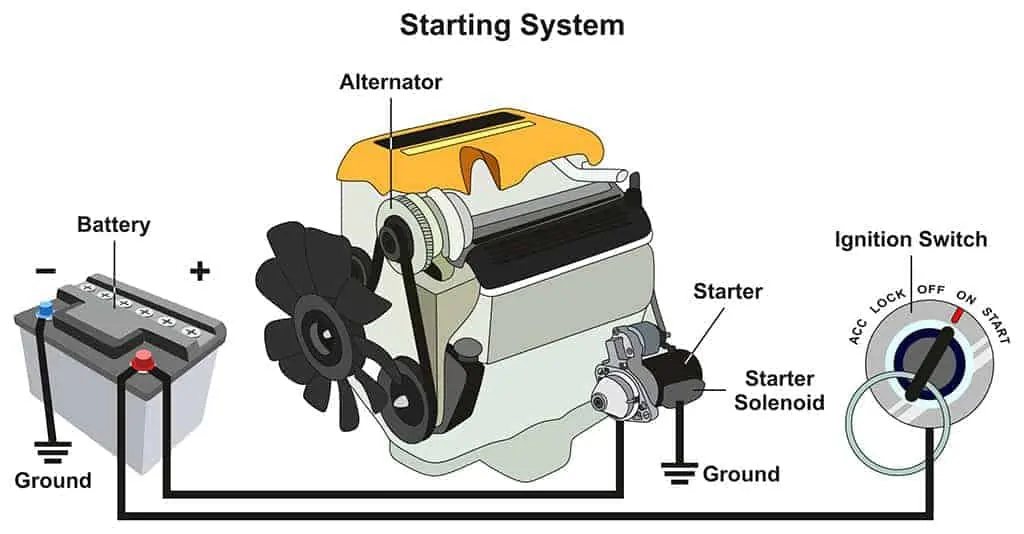
The primary electrical circuit in your car is the starting and charging system, which is put into action from the moment you attempt to start your car. The battery is what maintains the electricity to run all of the car’s electrical components, and most of all it provides the electricity to allow the car to initially start.
The starting process begins with the ignition switch, which makes the connection between the battery and the starter solenoid to engage the starter. The starter turns the engine until the combustion process starts at which point the engine continues to run without assistance from the starter.
If you still have a traditional key ignition, the weight on your keychain matters more than you’d think. Too many keychains can damage the ignition tumbler over time.
Once the car is running, the alternator is the component that keeps the battery charged. If the alternator fails to charge the battery, the car will slowly use all of the remaining charges in the battery until the car stops running.
One issue we see regularly in South Jersey is rodents chewing through vehicle wiring, which can cause electrical problems that are hard to track down. Here’s how to stop rodents from eating your vehicle’s wires.
The life expectancy of your car’s battery is roughly 4 to 6 years. If you find your battery is not lasting that long, you might have an underlying issue causing it to fail prematurely and we can investigate that for you.
Additionally, the battery may require service from time to time; mostly cleaning of the terminals if they become corroded, otherwise, they may not effectively conduct electricity throughout the car.
Cold weather puts extra strain on the entire electrical system. We cover whether your battery is strong enough to start in the cold and what to test before winter.
Here is an overview of your cars electrical system:
Electrical System Services We Perform:
- Complimentary Battery Check
- Battery Testing and Replacement
- Battery Terminal Cleaning and Replacement
- Battery Cable Replacement
- “No Start” Diagnosis
- Ignition Switch Replacement
- Starter / Starter Solenoid Replacement
- Alternator (and belt) Replacement
- Electrical System Diagnostics
Ready to Make An Appointment For Your Electrical System Service?
At Kneble’s Auto Service Center we always want to make the process of getting your car serviced as convenient as possible. To ensure that we can get your car serviced in a timely manner, we ask that you make an appointment for your electrical system service.
We are able to accommodate those who desire to wait for their tune-up as we feature a comfortable waiting area complete with TV, complimentary refreshments, a library, desk, and a charging station. And yes, we even have free Wi-Fi!
In some cases, we may determine that the car needs to stay overnight either due to the time required for service or the unavailability of parts.
If you need service and have not made an appointment you can always feel free to call us at (609) 625-3286 to get on the schedule.
Please note that we offer a shuttle service within a 10 miles radius of the shop (Millville, Somers Point, Ocean City, Margate, and surrounding areas).
Frequently Asked Questions About Electrical System Services:
It is very likely that a dead battery could be the cause. Loose battery cables or corroded battery terminals can also produce this system. Additionally, a faulty ignition switch could produce that symptom, but that is less likely. Please give us a call so we can make arrangements to help you get the car into the shop so we can further diagnose the problem.
A battery that is not fully charged would likely cause this. Please give us a call so we can make arrangements to help you get the car into the shop so we can further diagnose the problem.
A variety of malfunctions could cause this, however, it is likely that there may be a problem with the fuel or ignition systems. Please give us a call so we can make arrangements to help you get the car into the shop so we can further diagnose the problem.
Halogen vs. HID vs. LED headlights
When it’s time to replace a headlight bulb, you have three options. Each has different brightness, lifespan, and cost tradeoffs.
Halogen bulbs are the standard. Most vehicles come equipped with them. They produce about 800 to 1,000 lumens (roughly the brightness of a 60 watt household bulb), they’re affordable, and they’re easy to replace. If you’re looking for a straightforward, no hassle replacement, halogen is the default choice.
HID (high intensity discharge) bulbs use a gas chamber instead of a filament and require a ballast to connect to the vehicle’s electrical system. They’re significantly brighter than halogen, putting out around 3,500 lumens. The tradeoff: they’re more fragile, more expensive, and the extra brightness can create glare for oncoming traffic if the headlight housing isn’t designed for HID.
LED (light emitting diode) bulbs convert electricity directly to light. They produce 3,600 to 4,500 lumens, use less energy than both halogen and HID, and are more durable. LEDs don’t burn out the way traditional bulbs do; they only fail if a physical component breaks. They also offer better side of road illumination and give manufacturers more flexibility in headlight design. The downside is that they require cooling systems built into the housing and can be harder to find as replacements for older vehicles.
If you’re thinking about upgrading from halogen to HID or LED, check whether your vehicle needs an adapter kit first. Our lighting systems team can help you choose the right option for your car.
Read the full video transcript
When replacing headlights in your vehicle, did you know you have options? Halogen, HID, LED. You’re probably thinking, “Wow, that’s confusing.”
Hi, I’m Nancy at Kneble’s Auto Service Center. Well, let me help brighten things up for you. Halogen bulbs are commonly considered your standard bulbs. Most vehicles are equipped with halogen bulbs, emitting about 800 to a thousand lumens of light, which is the measurement of brightness. So for comparison, your 60 watt bulb in your house admits 800 lumens of light. With halogen bulbs, if you want to go brighter, you’re going to need to increase the wattage, which would increase the fuel usage as more fuel is required to power a higher wattage bulb.
Then there are HID bulbs, the high intensity discharge bulbs, which have a chamber of gas, not a filament like halogen, so it needs a ballast to connect to the vehicle’s battery to operate. They are brighter than the halogen and LED bulbs, and HID with an output of 3,500 lumens. HIDs are more fragile than other bulbs and may not last as long.
Finally, there are the LED lights, LED emitting diodes, which convert electricity from your vehicle to light. They’re just as bright as HIDs, producing about 3,600 to 4,500 lumens. LEDs are less fragile than HID lights and more durable. LED lights also use less energy to light than the HID and halogen and last longer. When customizing your lights, LEDs have more options. LED bulbs offer better illumination for the sides of the road.
So next time you’re replacing a bulb in your vehicle, consider your options: halogen, HID, or LED bulbs. There are pros and cons for all options, whether it’s the cost, longevity, durability, and possibly adapter kits needed before installing the bulb, so do your homework. Keep the road bright.
How keyless ignition systems work
Keyless ignition lets you start the engine with a push button while the key fob stays in your pocket. The system uses antennas built into the car’s frame that detect the radio signal from the fob. When you press the start button, the receiver confirms the fob is inside the vehicle, disables the immobilizer, and powers the starter circuit.
The key fob runs on a small battery (like a watch battery) that will eventually die. When it does, the fob won’t transmit its signal and the push button won’t work. Most manufacturers build a backup key inside the fob for this situation. Check your owner’s manual so you know where the backup is before you need it.
Replacing the fob battery is simple and inexpensive. If the fob itself is damaged or lost, replacement fobs need to be programmed to your vehicle’s security system, which is something we can do. A weak fob battery is also easy to confuse with a weak car battery, since both can cause no start conditions. If pressing the button does nothing, check the fob battery first before assuming the car battery is dead.
Read the full video transcript
What does having a keyless ignition system mean to you? Well, of convenience, of course. Hi, I’m Nancy at Kneble’s Auto Service Center. This system allows the driver to start the vehicle while having a key fob in your pocket. You just press that start button and you’re ready to drive.
“Well, how is this done?” you ask? There are antennas in the car’s frame that recognize the radio signal transmitted by the key fob, which is amplified with a battery in the key fob. Now it can determine with calculations that you are indeed in the vehicle and when you press the start button, the receiver disables the immobilizer, powers the start circuit and you’re ready to go, the engine starts.
But remember, in your key fob, there is a battery, just like the battery in your watch. It can go dead and need to be replaced, but when it does go dead, it will no longer work. Therefore, manufacturers put typically a backup key inside the key fob. Make sure you check with your manufacturer to know where your backup system is.
Schedule an Appointment for Your Electrical System Repair
Electrical System Knowledge Base
Automotive Electrical System Videos







Automotive Electrical System Articles
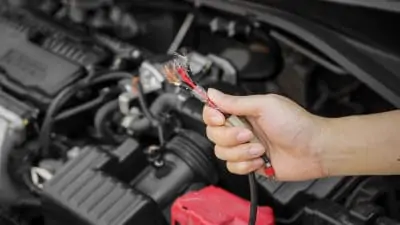
How to Stop Rodents From Eating Your Vehicle’s Wires
Have rodents ravaged the wires in your vehicle, or are they setting up shop in your car’s engine? Read our guide to prevent rodent activity!

Common Causes of a Faulty Car Battery
Learn about the common causes of a faulty car battery and discover ways to extend the life of your vehicle’s battery.

The Dangers of Driving Your Car Through Flood Water
Did you know driving a car through flood water can potentially ruin its engine? Learn about the damages flood waters can do to your vehicle.
Where to Get Your Vehicle’s Electrical System Repaired?
Our Address
5473 Somers Point Road
Mays Landing, NJ 08330
Our Hours
Monday – Friday: 8:00am – 5:00pm
Saturday:
8:00am – 4:00pm
Sunday: Closed